
In June 1983, Tina Burmeister started a summer job with the Division of Cardiothoracic Surgery as a 15-year-old high schooler, working part time. Because of her early interest in computers and data architecture, she found a fruitful, life-long career at Washington University School of Medicine in St. Louis at a young age.
Tina’s service has been praised highly by faculty in the division and recognized in credits on publications in national databases and medical journals. She started from the ground level and has assisted in building the Clinical Research and Data Management group within the division, which other Department of Surgery research groups have later adopted. This summer job turned into a career that played a pivotal role in the data reporting infrastructure throughout the department.
This June would have marked 43 years of Tina’s service in the Department of Surgery. Her work there has consisted of managing the division’s Society of Thoracic Surgeons (STS) data uploads, reporting outcomes and intraoperative data for major projects.
How it all began
In the summer of 1983, Tina’s mother, who worked in the cardiothoracic surgery office, invited her to help with filing.
“I was going to school for business management and finance, so I had some office skills,” Tina said. “So I came in to help out a bit, and my mom’s boss pulled her aside and asked if she could offer me a job. I ended up working during the summer and then in the afternoons of my junior and senior years of high school.”
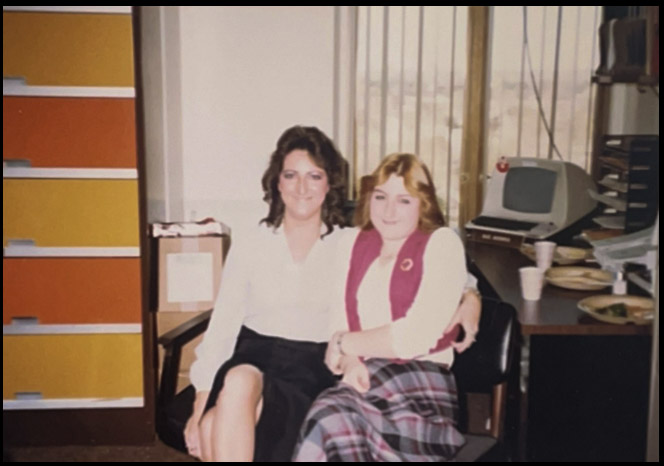
Tina started out working in the Department of Surgery billing, like her mother. Once she graduated from high school in 1985, she transitioned to OB/GYN billing and worked there for four years. She transferred to the Division of Cardiothoracic Surgery in 1988 and remained there ever since.
Having attended WashU in the interim, Tina studied database management and had proficiency using computers to organize data. She witnessed major changes in data management from early technologies to contemporary advanced systems over the years.
“When I started in CT, I was just doing data entry of forms into a database, until my boss at the time took another job,” said Tina. “She basically handed the database stuff over to me.”
Raising family and working hard
Thanks in part to Tina’s efforts in managing the STS databases, Barnes-Jewish Hospital and WashU Medicine have maintained the highest level of standing regionally.
“Our data follows each of our surgical patients from pre-op through intra-op and post-op and up to 30 days after surgery,” Tina said. “Which is how the STS structures star ratings. This data management is how my name comes up in some reporting and in PubMed databases, because that data is what our doctors use to do research and write papers and give talks.”
Tina finds a lot of satisfaction in what she has helped create in the Division of Cardiothoracic Surgery.
“I’ve poured a lot of my heart and soul into my work, which I owe to the support I’ve received from the doctors who I have worked with over the years,” said Tina. “They’ve always been so good to me, and the collaborative spirit has made it so much better to go to work every day.”
WashU Medicine has facilitated a comfortable work-life balance for Tina and her husband Ron, who also works for the university. Working in the Department of Surgery gave her the flexibility to be available for her family when necessary and helped her children go to college through the employee benefits package.
“I’ve always liked working for WashU. My husband and I both took the opportunity to go to college as an employee benefit. I always tell people that we have great benefits. I’m also retiring early as a perk and I don’t know if I would have been able to do all that without support from WashU,” said Tina, who is retiring at 58. She noted that her husband will also be retiring soon. “Besides that, I have made some amazing friends along the way. I met my best friend in the department in 1989 and we’re still super close.”
Tina has found encouragement in the collaborative environment among her team. She has witnessed the growth of many surgeons from residency and into faculty roles at WashU Medicine and other leading institutions, collaborating in their research. She has made friends with many coworkers along the way, including very close ties with the surgeons. Tina considers them family for their support during difficult times.
“My mom recently passed after a long hospital stay,” Tina said. “While she was in the hospital, doctors were constantly stopping in to see how she was doing and to check on me and offering support, reminding me that we’re family. I really have such an appreciation for all of the doctors who I work for.”
Departmental evolution
When Tina started, computers were just beginning to be used for logging data. The university was an early adopter of word processing software.
Having worked at WashU Medicine over the span of four decades, Tina has experienced all kinds of evolutions – in processes, the physical appearance of the university, and faculty and training upgrades.
“One of the biggest changes I’ve seen in my time has been technology,” said Tina. “When I started this job, we were using WordStar, so you had to put in a giant disc that was the operating system and then another disc that would be the one you save files to. So that and obviously the new procedures our surgeons perform, and the campus has grown, as well.”
Among the recent changes, Tina was able to work almost entirely remotely, because her work did not require her to be physically present on campus.
“Ever since COVID, I have mostly worked from home, coming in only once a week to move some paperwork along,” said Tina. “The main complaint I hear from people now is that parking has gotten so expensive. When I started here it was super cheap, probably less than $10 per month to park.”
Life after WashU Medicine
On March 28, Dr. Damiano hosted a dinner to celebrate Tina’s retirement. Monday, March 2 was Tina’s last day on the job, but she will continue working on a “zero-hours” basis, training the new database analyst.
“After my last official day, I will continue to help out at the office for any questions or major deadlines coming up because a lot of the stuff in the process is in my head, since I’ve been doing it for 30 plus years,” said Tina. “A lot of the work has become automatic to me. I could do it in my sleep.”
In preparation for retirement, Tina and her husband have downsized their home.
“My children, Holly and Adam, are both living in St. Louis,” said Tina. “My daughter just adopted my second granddaughter, and I plan on being a full-time stay-at-home grandma, while she works. My daughter is a nurse.”
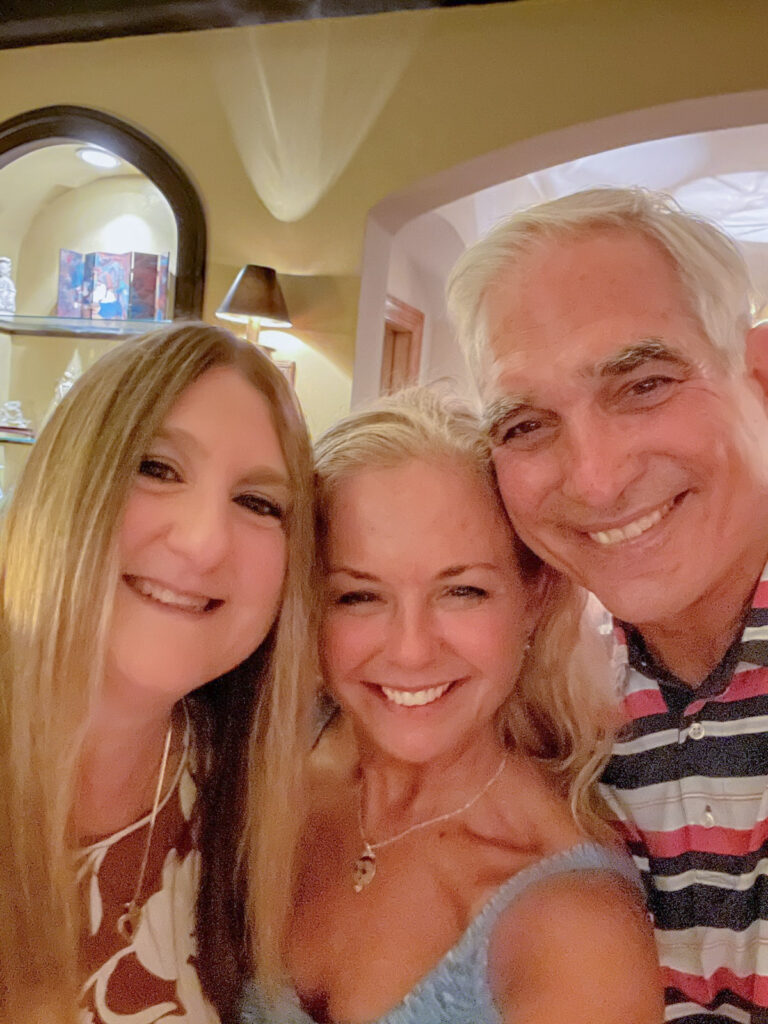
Tina says she will miss the excitement of breakthroughs and friendships among her colleagues the most.
“I’ll miss everything except the stress of the job,” said Tina.
In June, Tina and her husband will be celebrating their 40th wedding anniversary. They plan on taking a relaxing trip in the summer. “We’re thinking about a cruise, but we may just take some time away at the lake,” said Tina.
Tina and her family are also in the midst of planning a wedding for their son, who will be getting married in the fall.
Congratulations to Tina Burmeister for providing excellent service over a long and fulfilling career!