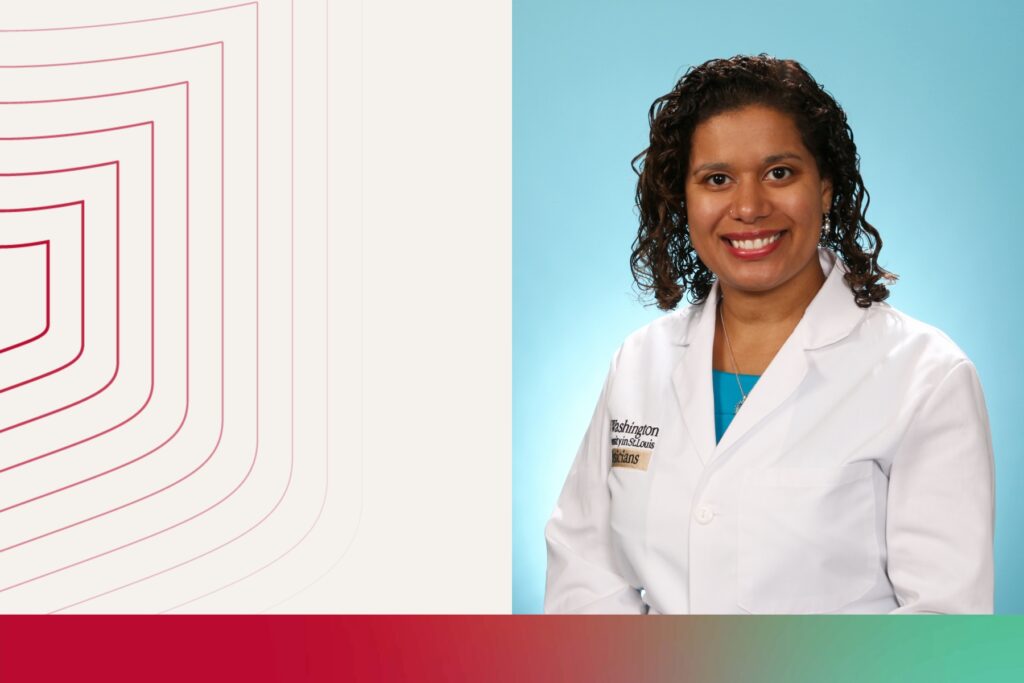
Kelly Currie, MD, an associate professor of surgery in the Division of Plastic and Reconstructive Surgery and associate program director of the plastic surgery residency at WashU Medicine, is co-author of a publication that outlines a structured model to improve how faculty teach residents during surgery. Importantly, the simulation is not designed to assess teaching, measure learning outcomes or evaluate resident operating room competencies. Rather, it is a faculty development activity that gives educators a low-stakes, structured opportunity to rehearse the words, timing and judgment involved in procedural feedback.
The model emphasizes a clear briefing before a case, focused intraoperative teaching and a debriefing afterward, with the goal of making teaching in the operating room more intentional, efficient and effective for both learners and faculty.
In the article, published in the Journal of Graduate Medical Education, Currie and colleagues describe practical strategies faculty can use in real time — such as setting expectations with residents before entering the operating room and using the debrief to provide specific feedback and identify next steps for skill development.
In the simulation, a faculty participant serves as the preceptor supervising a postgraduate year 2 “resident,” portrayed by a resident actor. The resident’s technical skill, insight, and receptivity to feedback are scripted to vary, recreating real coaching challenges. Faculty are asked to observe and provide feedback across all three phases of care—pre-procedure, intra-procedure, and post-procedure—using the briefing, intra-procedure teaching, debriefing (BID) feedback model. Before the scenario, participants complete a performance dimension training exercise to develop a shared mental model before being given a custom checklist of observable behaviors (for example, initiating planning with the attending, using an appropriate instrument grip, or adjusting technique after a complication) to structure entrustment ratings and guide feedback content.
A key strength of this innovation is its accessibility: it requires only a simple tabletop game and printed framework checklists, making it scalable and feasible for a wide range of programs. Early interest from other institutions—such as The Accreditation Council for Graduate Medical Education (ACGME) assessment course leaders requesting materials to adapt—suggests this approach is replicable and generalizable. Future studies will evaluate the impact of this simulation on actual feedback performance and faculty confidence in real clinical settings, but early indicators highlight a promising low-cost way to help faculty strengthen real-time, periprocedural feedback skills in graduate medical education. The work is also informing related adaptations. Currie is developing a medical-student-focused project that uses the same low-fidelity procedural simulation approach but shifts the emphasis toward early learner needs, including communication, understanding how to participate meaningfully in procedural environments, and, most importantly, feedback receptivity.
By offering a simple, reproducible framework, the work aims to help surgical educators better integrate teaching into busy clinical workflows and to support more consistent competency-based training for residents.
The article was featured in the Articles of the Week section on the Accreditation Council for ACGME newsletter. Currie also discussed the project as a featured guest on the Hot Topics in MedEd: Journal of Graduate Medical Education Podcast, where she highlighted how the low-fidelity simulation can help faculty practice real-time procedural feedback in a structured, psychologically safe way.