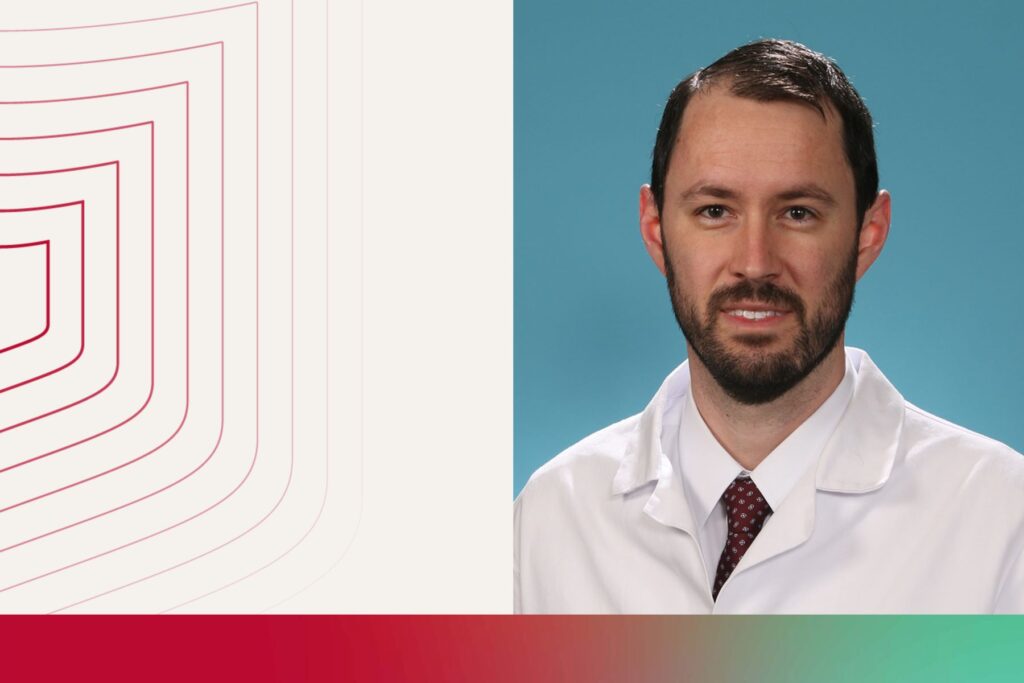
Dr. J. Westley Ohman is the director of the Division of Vascular Surgery and an associate professor of surgery at WashU Medicine. He also serves as the surgical director of the aortic and renovascular center for hypertension at St. Louis Children’s Hospital and co-director of the WashU Medicine Aortic Center. Dr. Ohman is a prominent figure in the field of vascular surgery, with numerous publications and contributions that have significantly advanced the understanding and treatment of heritable thoracic aortic diseases.
Marfan syndrome and vascular health
Question: How does Marfan syndrome affect vascular health?
Answer: Marfan syndrome (MFS) is a connective tissue disorder that leads to various cardiovascular complications, primarily affecting the aortic wall’s integrity. The condition is characterized by a spectrum of skeletal and neurologic manifestations, such as kyphoscoliosis, pectus deformity, and dural ectasia. Specific arterial imaging findings indicative of MFS include near/full circumferential delamination of the intima, multiple flaps, and tortuosity/redundancy of branch vessels.
Q: How do patients’ specific phenotypes inform treatment options for Marfan syndrome?
A: A personalized medical approach based on individual genotype variants is key to understanding one’s options. This phenotypic information helps tailor treatments more accurately to manage the fragility of the aortic wall in MFS patients. This individualization is crucial because it guides decisions around medical therapy, endovascular procedures, and open surgical repairs, depending on each patient’s unique risk factors and pathology.
Multidisciplinary collaboration in vascular health
Q: How important is a multidisciplinary team in managing vascular health in patients with connective tissue disorders like MFS?
A: A collaborative and multidisciplinary approach in patient care is critical for patient care. Our team includes specialists from cardiac surgery, vascular surgery, cardiology, and radiology, with an upcoming addition of medical geneticists. This diverse expertise enables us to provide a unified and comprehensive medical opinion, which is essential for proper management, especially in complex cases involving MFS.
Decision-making for thoracic endovascular aortic repair (TEVAR)
Thoracic Endovascular Aortic Repair (TEVAR) for patients with connective tissue disorders (CTDs) involves using percutaneous closure in the preclose technique, which is safe and effective. Devices with staged deployment are preferred to reduce the risk of intraoperative stent graft-induced new entry tears. The sizing of devices typically involves a 5% to 15% oversizing based on intraoperative intravascular ultrasound measurements. Limited aortic coverage is planned for resolving renovisceral malperfusion, with the total aortic diameter being measured to assess the need for tapered devices.
Q: What considerations are taken into account for opting for TEVAR in Marfan syndrome patients?
A: The primary goal of therapy, whether to resolve renovisceral malperfusion or to provide aortic coverage, significantly influences the technical approach. Devices used in TEVAR are selected with care, often favoring staged deployment to minimize intraoperative risks. Our protocol emphasizes safety and the effective use of the percutaneous closure technique, especially in patients with MFS.
Dr. Ohman’s insights emphasize a nuanced and collaborative approach to managing vascular health, particularly in patients with Marfan syndrome. Through multidisciplinary collaboration and individualized treatment plans, Dr. Ohman’s methods aim to optimize patient outcomes in this complex and challenging field of medicine.