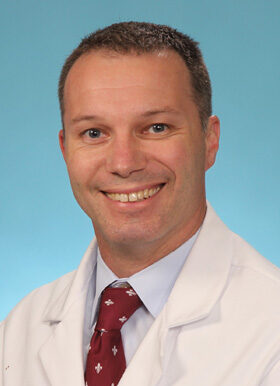
Isaiah R. Turnbull, MD, PhD
Associate Professor of Surgery
Division of Acute and Critical Care Surgery
- Phone: 314-362-5298
Specialties
- Acute and critical care surgery
- Sepsis/shock
Call for patient appointments: 314-362-5298
Meet Dr. Turnbull
Dr. Isaiah Turnbull is a trauma surgeon specializing in acute injury management.
He has expertise in acute and critical care surgery, management of sepsis, and postoperative care.
Dr. Turnbull earned his medical degree from WashU Medicine. He also completed general surgery residency training and a surgical critical care fellowship at WashU Medicine.
Severe burns are a serious civilian public health problem. We have focused on the military population, because the combat-related burn injuries often have other associated traumatic injuries that further contribute to the immune dysfunction induced by burn. We would like to extend these studies to civilian burn patients and also to non-burn severely injured trauma patients that we take care of here at our Level-1 trauma center.
Dr. Turnbull
Degrees
Medical Degree
WashU Medicine, St. Louis, MO
2008
PhD
WashU Medicine, St. Louis, MO
2008
Residency
General Surgery Residency
WashU Medicine, St. Louis, MO
2013
Fellowship
Surgical Critical Care Fellowship
WashU Medicine, St. Louis, MO
2013
Research interests
Patient safety
Shock
Sepsis immunology
Burn
Locations
Barnes-Jewish Hospital
One Barnes-Jewish Hospital Plaza
St. Louis, MO 63110
Fax: 314-362-5743
Appointments: 314-362-5298
Barnes-Jewish Center for Outpatient Health
4901 Forest Park Avenue
St. Louis, MO 63108
Fax: 314-362-5743
Appointments: 314-362-5298
Hospital affiliations
Barnes-Jewish Hospital
Board certifications
- Surgery
Dr. Turnbull in the news
- Four-Year Grant Awarded to Acute and Critical Care Research Project
- Postoperative Care – Washington Manual of Surgery
- Surgeons Receive AJT Outstanding Article Award
Professional Memberships
American College of Surgeons
Areas of Research Interest
Medical and surgical training burnout, and how this issue compromises training, clinical efficacy, and quality assurance.