
The Toriola Lab aims to characterize the molecular basis and determinants of mammographic breast density in order to identify those that can be targeted in breast cancer prevention, especially in premenopausal women, and to address methods for the use of biomarkers and their applications in cancer etiology and prognosis.
The lab is led by Adetunji Toriola, MD, PhD, MPH, a professor of surgery and William H. Danforth Washington University Physician Scholar in the Division of Public Health Sciences at WashU Medicine.
As a molecular cancer epidemiologist, Dr. Toriola’s research addresses methods for the use of biomarkers of energetics, metabolic imbalance, and inflammation, and their application in cancer etiology and prognosis, with a focus on breast and gastrointestinal cancers.
Principal investigator
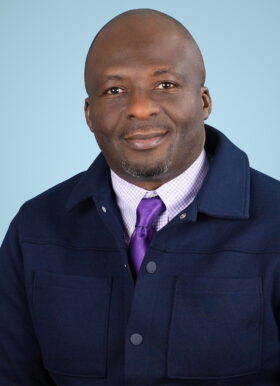
Adetunji T. Toriola, MD, PhD
Professor of Surgery
William H. Danforth Washington University Physician Scholar
Division of Public Health Sciences
Contact
Toriola Lab
600 S Taylor Ave
St. Louis, MO 63110
Current research
Study background
The ColoCare Study is a cohort of colorectal cancer patients. The goal of the ColoCare Study is to uniformly collect comprehensive clinical data, information on health behaviors and biospecimens (blood, urine, saliva, stool, tumor tissue etc) from 4,000 colorectal cancer patients at multiple time points (prior to surgery and 3, 6, 12, 24, 36, 48 and 60 months post-surgery), and quantitative accelerometry data to assess physical activity. ColoCare is uniquely suited for the discovery of new biomarkers of colorectal cancer treatment response and prognosis, as well as research that elucidates the influence of health behaviors on treatment efficacy and toxicity, quality-of-life, recurrence, and survival. The ColoCare Study was initiated by Dr. Neli Ulrich together with Dr. Bill Grady at the Fred Hutchinson Cancer Research Center in 2007. Since 2007, the consortium has expanded to include:
- Cedars-Sinai
- Fred Hutchinson Cancer Research Center
- German Cancer Research Center
- Huntsman Cancer Institute
- Moffitt Cancer Center
- The University of Tennessee Health Science Center
- Washington University School of Medicine
Eligibility
You may be eligible to participate if you:
- Have recently been diagnosed with primary colon or rectal cancer
- Aged 18 and older
What will I be asked to do?
We would see you 4 times over 2 years at your regular clinic appointments. You will be asked to complete, and provide:
- Survey questions about your health habits, quality of life, and medical history
- Blood samples
- Saliva samples
- Urine samples
- Stool samples
Important notes
- Participating in this study will not change your medical care
- ColoCare Study will not charge you or your insurance company for study-related activities
- The ColoCare Team will coordinate specimen sample collection with your doctors and nurses
- Your participation is voluntary and confidential
- You can stop participating at any time
Coordinator contact information
Apurva Medhe
Phone: 314-286-2547
Email: [email protected]
Community Advisory Board (CAB): The ColoCare Consortium has a Community Advisory Board (CAB). CAB members receive background information on colorectal cancer survivorship and are invited to provide their perspectives on the identification and prioritization of research topics and on the study’s procedures, protocols, and patient communication methods. CAB members participate in the annual investigator meeting, one additional conference call per year, and respond to questions or needs that arise.
Current St. Louis Area CAB Member: Katrina Flood
Contact a CAB Member with questions or to join their Facebook support group: [email protected]
Study background
A sizeable proportion of premenopausal breast cancer cases are attributable to having dense breasts. Studies have shown that a decrease in mammographic breast density translates to a reduction in breast cancer incidence. Hence, interventions to reduce mammographic breast density could prevent breast cancer. However, adult dietary and lifestyle modifications have not been shown to reduce mammographic breast density. Therefore, identifying a pathway that can be targeted to reduce breast density and breast cancer incidence is crucial. The receptor activator of nuclear factor-κB (RANK) pathway is important in breast development and progesterone signaling. The RANK pathway also activates downstream signaling cascades involved in breast cancer and has been shown to be positively associated with mammographic density. A well-tolerated RANKL antibody (denosumab) is already in clinical use to prevent fractures in postmenopausal women.
Study goal
Our goal in this Phase II clinical trial is to perform a randomized clinical trial to quantify the effect of RANKL inhibition on mammographic breast density in 210 premenopausal women with dense breasts. Study findings could open up additional therapeutic approaches in primary breast cancer prevention for premenopausal women with dense breasts, who do not have a dominant genetic predisposition.
Eligibility
You may be eligible to participate if you:
- Are premenopausal
- Aged 40 years and older
- Have dense breasts
- Never had cancer
What will I be asked to do?
If you agree to participate, you will:
- Continue your routine mammograms at baseline, 12 months, and 24 months (allowing the study team access to your mammogram images)
- Complete a urinary pregnancy test at baseline and 6 months, prior to intervention
- Complete a survey that should take no longer than 30 minutes
- Have your blood drawn at the first study visit, 6 months, and at 12 months
- Receive a breast biopsy performed by a breast radiologist at the first study visit and at 12 months
- Be randomized to receive an injection (denosumab or placebo) underneath your skin in the upper arm at the first study visit and at 6 months
- Take Calcium and Vitamin D supplements provided by the research team for 12 months
Participant updates
Since beginning our study in 2019, we have enrolled 210 women. Of these women, 189 have completed their 12-month visit, meaning they have completed two breast biopsies and injections. We thank all the women who have enrolled in our study and invite any women who are interested to learn more about our previous participants’ experiences.
Coordinator contact information:
Nimisha Manjrekar
Phone: 314-286-2779
Email: [email protected]
TRIDENT Trial – Closed for accrual
Funding: NIH/NCI R37CA235602 (PI: Toriola)
More information on the TRIDENT Trial is available on Clinical Trials.gov here
The TRIDENT Clinical Trial was featured in this news release>>
Study background
The purpose of the Developing Understanding of the Environment of Disseminated Tumor Cells (DUET) study is to identify new ways of preventing breast cancer patients from dying of their disease. In particular this study is focused on understanding why some breast cancer patients go on to develop a recurrence of their cancer and others do not.
This research is done by collecting information and specimens from recently diagnosed breast cancer patients. A major focus is determining how the presence of cancer cells in bones at the time of diagnosis can contribute to the development of a cancer recurrence years later.
This study is being done in collaboration with the Huntsman Cancer Institute at the University of Utah, Washington University in St. Louis and the University of San Francisco.
Read more on the Fred Hutch Cancer Center website>>
Eligibility
You may be eligible to participate if you:
- Recently diagnosed with stage I-III breast cancer
- Will receive surgery at UW Medical Center or UW Medical Center – Northwest, Huntsman Cancer Institute in Salt Lake City, Utah, or Washington University Medical Center in St. Louis, Missouri
What will I be asked to do?
- Patients agree to donate a portion of their cancer tissue removed at the time of their surgery for research.
- Patients agree to allow us to conduct a bone marrow biopsy and aspirate.
- Patients are invited to donate a blood sample and complete a questionnaire annually for up to 9 years (providing these samples and completing these questionnaires is optional).
- Patients consent to allow our study team to review their medical records related to their cancer diagnosis and all of the treatments they receive.
- We offer a modest compensation at each time point for completion of study activities.
Why be a part of DUET?
Participants provide essential information to this research. The more women who accept this invitation to participate, the more we may learn about why some breast cancer survivors develop a recurrence of their cancer years after their initial diagnosis and others do not.
Important notes
Although the study will not benefit participants directly, we hope the information we learn will improve our knowledge about breast cancer recurrences and help future patients by, for example, providing information that will help us develop novel treatments to prevent women from dying of breast cancer.
Participation will not affect your medical care and is voluntary and confidential.
Coordinator contact information
Nimisha Manjrekar
Phone: 314-286-2779
Email: [email protected]
Funding: Congressionally Directed Medical Research Program Department of Defense Brease Cancer Research Program
Study background
Breast density is a strong risk factor for breast cancer and is also a marker for breast cancer development. The purpose of this study is to determine how metabolites in the blood are associated with breast density. Metabolites are small chemicals in the blood which play critical roles in keeping our cells healthy and functioning properly.
Study goal
Study findings will help us understand why some women have dense breasts while others do not. It will, thus, lay the groundwork to determine whether metabolites that can be intervened upon are associated with breast density and ultimately breast cancer risk, thus contributing to breast cancer prevention in younger women.
Recruitment has been closed for the metabolomics study and publications are in process!
Funding: NIH/NCI R01CA246592 (PI: Toriola)
The Toriola Lab seeks to understand the molecular basis of mammographic breast density, especially in premenopausal women, and how this can be utilized in breast cancer prevention. Previous and ongoing studies include:
Receptor Activator of Nuclear Factor-kB (RANK)-axis and Mammographic Density: We showed that breast tissue RANKL gene expression and circulating RANK biomarkers (RANK and sRANKL) are positively associated with mammographic breast density in premenopausal women. Funding: Susan G. Komen Foundation (CCR15332379), NIH/NCI (R21CA216515).
RANKL Inhibition and Breast Tissue Biomarkers: The goal of this phase 1 clinical trial is to quantify the effect of RANKL inhibition with denosumab on breast tissue markers in high-risk premenopausal women with dense breasts. Funding: Siteman Cancer Center Siteman Investment Program and Centene Foundation.
RANKL Inhibition and Mammographic Breast Density (TRIDENT): The goal of this ongoing phase II clinical trial is to quantify the effect of RANKL inhibition with denosumab on mammographic breast density in premenopausal women. Funding: NIH/NCI (R37CA23560).
Metabolite Profiles and Mammographic Density in Premenopausal Women: The goal of this study is to use high-throughput state-of-the art, well-validated metabolomics platforms to investigate the metabolome of mammographic density in premenopausal women. Funding: NIH/NCI (R01CA246592)
Our team
Adetunji T. Toriola, MD, PhD
Professor of Surgery
William H. Danforth Washington University Physician Scholar
Division of Public Health Sciences
Nimisha Manjrekar, MDS, MPH, FDPO
Public Health Research Coordinator II
Apurva Medhe, MDS, MPH, CPH
Public Health Research Coordinator II
Alex Schrautemeier, MHS
Public Health Research Coordinator I
Ghazaleh Pourali, MD
Post-doctoral Research Associate
Yueshui Lyu, MS
Data Analyst
B. E. Chung
Research Intern
Emilie McHenry
Research Intern
Jasmin Turkson
Research Intern
Samantha Battaglia
Research Assistant
MPH/MSW Student
Israel Bacha, MD
Research Intern
MPH/MBA Student
Akshaj Jonnalagadda
Research Intern
MD Student
Nassim Aidja
Research Intern
Yeabtsega Asres, MD, MPH
Research Assistant
News and updates

Lab alumni
Suleepon “Emmy” Uttamapinan, MD, MSc
Senior Public Health Research Coordinator
Sarah Ning
Public Health Research Coordinator I
Lara Goodrich
Public Health Research Coordinator I
Dante Chao, MA
Public Health Research Coordinator II (2019 – 2024)
Alena Ahrens, PhD, MFA
Senior Public Health Research Coordinator (2018 – 2023)
Ava Weibman
Public Health Research Coordinator II (2019-2022)
Irene Wang
Public Health Research Coordinator I (2019-2022)
Trisha Grewal, MPH
Public Health Research Coordinator I (2018-2021)
Hannah Brenton
Public Health Research Coordinator I (2020 – 2023)
Kayla Getz, PHD, MPH
Post-doctoral Fellow
Supriya Sthapit, MPH
Research Assistant
Oreoluwa Oginni, MPH
Research Assistant
Kayode Matthew, MD
Graduate Student
Shuai Xu, MPH
Graduate Student (2020-2021)
Yingwen “Jane” Shi, MPH
Graduate Student (2021-2022)
Polly Haun, MPH
Graduate Student (2021-2022)
Amrit Avula
Graduate Student
Charlie Repaci
Graduate Student
Liang Li
Graduate Student
Clifford Atiuri, MPH
Graduate Student (2021-2022)
Wenqing Zhang, MSW
Graduate Student (2022)
Joy Kyeyune
Graduate Student (2023)
Keshav Kumar
Graduate Student (2023)
Ramkrishna Kumar Singh, MBBS
Graduate Student (2023)
Kerem Yucebas
Undergraduate Student (2018-2021)
Hasan Salim
Undergraduate Student (2021)
Yousaf Malik
Undergraduate Student (2021-2022)
Vikram Murugan
Undergraduate Student (2022)
Nicole Semanik
Intern
Sally Gacheru
Undergraduate Student (2022 – 2023)
Nimo Abdi
Intern
DBBS students, Washington University in St. Louis
- Megan Glasheen – 2014
- Linda Johnshon – 2016
- Yize Li – 2017
MPH/MSW students, Brown School, Washington University in St. Louis
- Majunder Monami – 2014
- Shin Hyelim – 2015
- Min Jong Lee – 2015
- Zhujun Huang – 2016
- Diane Eapen – 2017
- Solenne Wachsman – 2020
- Kenya Johnson- 2021
MSBDS students, Washington University in St. Louis
- Leavitt Morrison – 2014
- Yize Li – 2015
- Xiangji Ying – 2016
- Mei Wang – 2017
MPH students, Saint Louis University
- Yinjiao Ma – 2015
- Xiaoyu Zong – 2017
- Xiaoyue Mi – 2019
Medical Students, Saint Louis University
- Rachael Newton – 2019
Department of Biology, Washington University in St. Louis
- Valerie Otti – 2016
- Victoria Olojo – 2017
- Fred DeRosier – 2020
IPH Summer Research Interns
- Aaron Tesfai – 2016
- Courtnie Phillip – 2017
- Chee Teik Lee – 2019