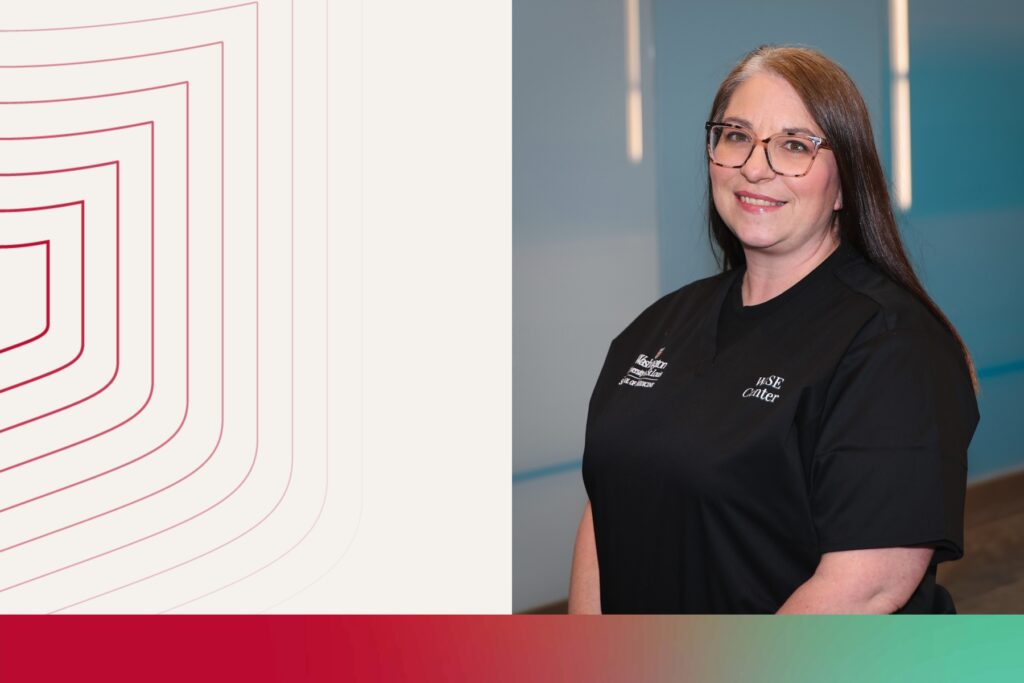
Over 15 years, Education Service Coordinator Angelia DeClue, CST, has watched the Washington University Institute for Surgical Education (WISE) transform while building a career she never expected.
DeClue began as a surgicaltechnologist in the operating room, a role she held for about four years. During that time, she frequently worked with then‑new attending physician, Michael Awad, MD, PhD. As they worked together, she learned about the educational projects he was developing. One day, he told her WISE was hiring for the simulation center. The position involved setting up and taking down equipment for surgical skills labs for residents, fellows and medical students—without weekends or on‑call shifts. DeClue applied, was hired and, 15 years later, still loves the job and the work-life balance it provides.
“In the beginning, the work-life balance was built-in, since I worked on an hourly capacity,” said DeClue. “Even now, with a bit more responsibility, I can’t tell you how many times I’ve told Dr. Awad how much I love my job. It’s so fulfilling getting to work with med students and residents and get to see them grow into their lane as surgeons.”
DeClue reflected that in the beginning of her time at WISE, the simulation labs were only offered on Wednesdays from 9 to 11 a.m. Over time, WISE outgrew that space and moved to its current location at the Clinical Sciences Research Building on the Washington University Medical Campus.
The evolution of WISE
When DeClue arrived, WISE operated out of the Wohl Clinic building.
“WISE has evolved immensely in the last 15 years,” DeClue said. “The original location had a window that overlooked the Children’s circle, but we only had one laparoscopic simulator and a pop-up table that had some open suturing practice supplies and that was it.”
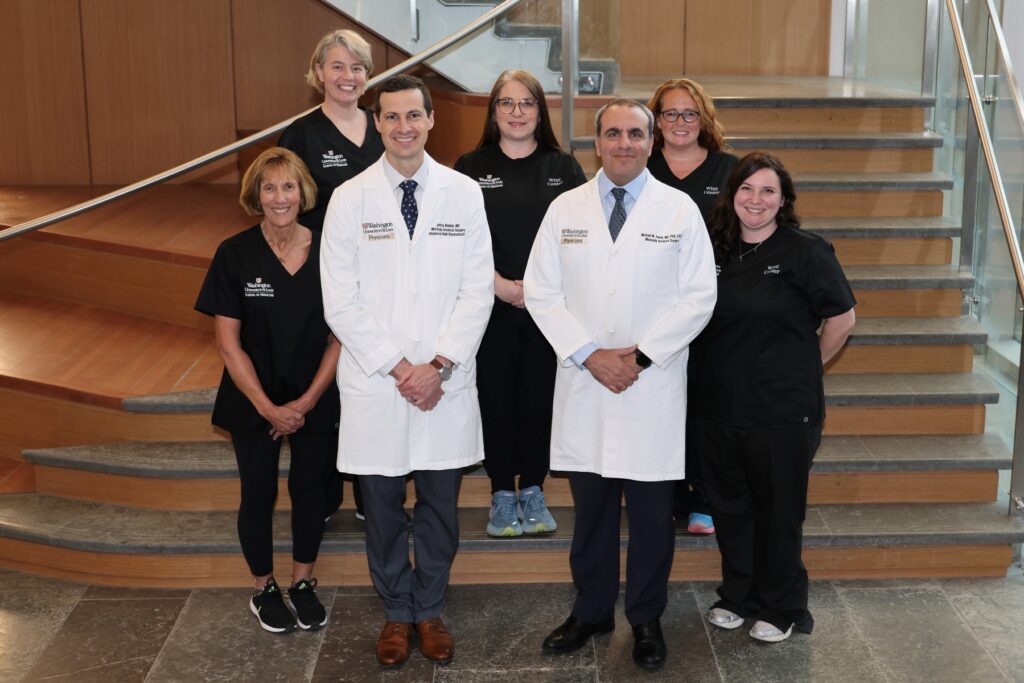
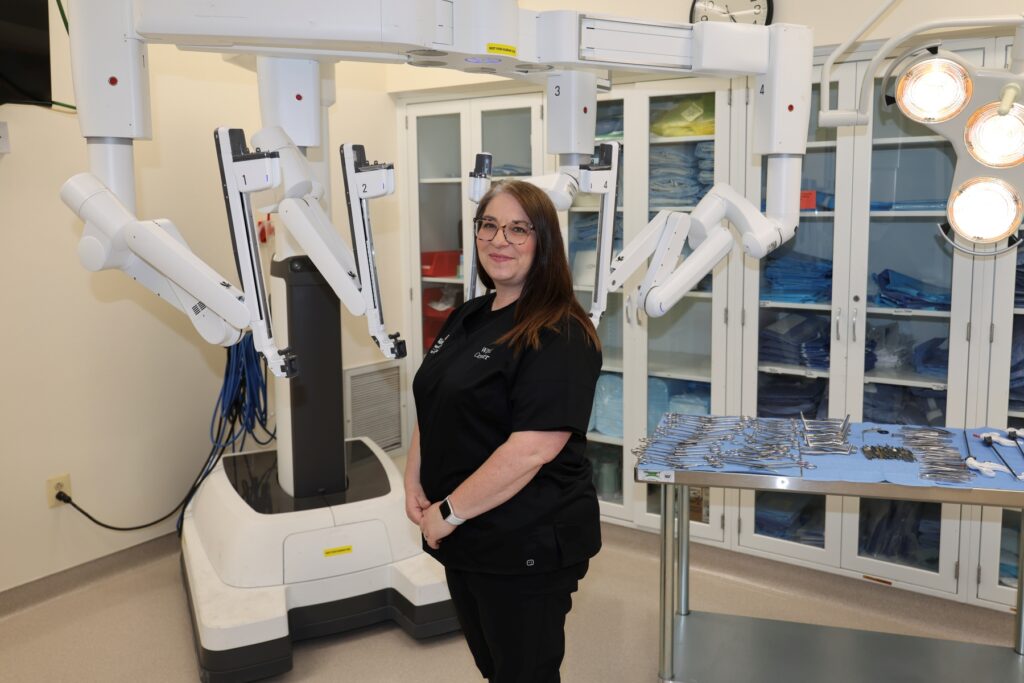
Over the next several years, WISE expanded into the multifunctional dedicated space of 6 rooms we see today, which are used for open, laparoscopic, robotic, and endoscopic simulation.
The main lab area had previously been part of the Washington University Institute for Minimally Invasive Surgery (WUIMIS); eventually WUIMIS and WISE came together under one umbrella, giving the team a shared, flexible space to support growing educational needs.
DeClue’s role centers on coordinating a required two-year curriculum for residents. She serves on a curriculum committee that meets every other Friday, bringing together WISE and residency leadership to balance lectures, grand rounds and visiting speakers with hands‑on simulation labs.
“We always try to find a happy medium between what works for lectures and didactics,” said DeClue. “We try to schedule labs to coincide with related topics from lectures and grand rounds, et cetera, which means we have to coordinate with the Office of Surgical Education and leaders in the residencies.”
Continuing success in simulation
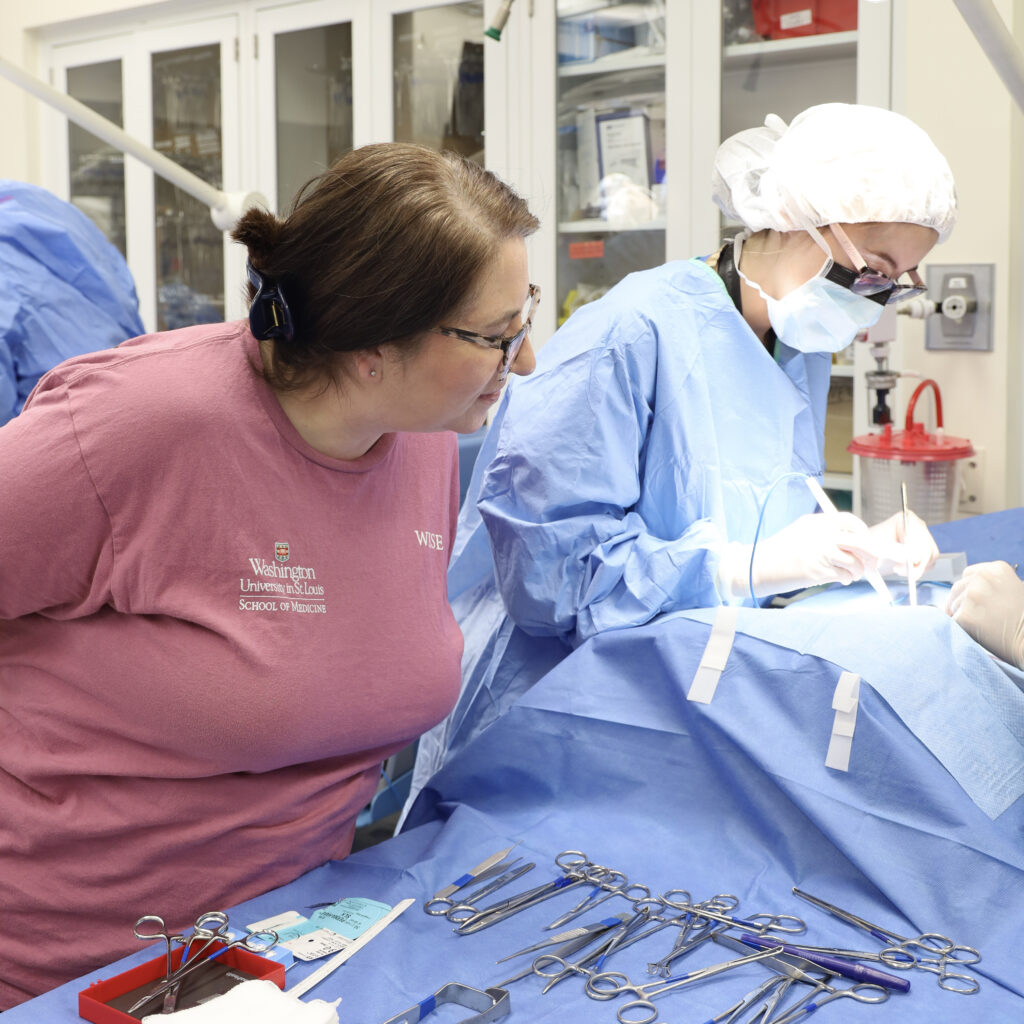
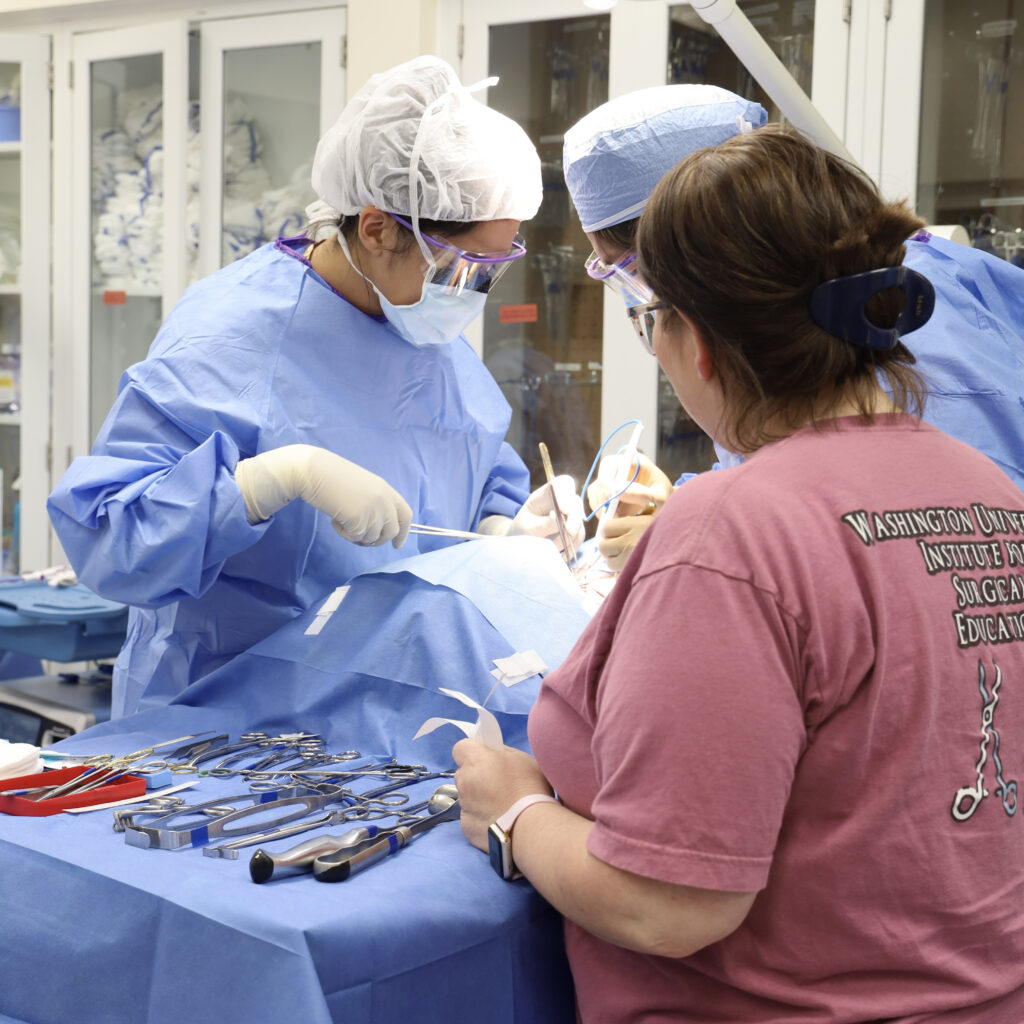
Simulation training has been a requirement for residents throughout DeClue’s tenure. To accommodate all trainees, she and her colleagues plan and schedule the same lab over three to four weeks, with small groups—often 6 to 12 residents at a time—so each learner can work closely with faculty experts and receive consistent mentorship and instruction. This structure supports an intimate learning environment, even as class sizes grow.
Along the way, DeClue has been influenced by leaders such as former general surgery residency program director and later vice chair for education of the Department of Surgery, Mary Klingensmith, MD, who helped move surgical education beyond a “see one, do one, teach one” mentality toward structured simulation‑based training. DeClue, who had known about skills labs for nurses and surgery techs from her own education, was struck to discover a similar world existed for physicians seeking a surgical specialization and has taken pride in helping to build that niche at WISE.
As her career at WISE has progressed, DeClue notes a shift in perspective. When she started, many of the residents were older than she was. Now she is older than all of them and sees them almost as her own children. She speaks of a “mom heart” that takes pride in their growth and accomplishments, revealing the personal and relational dimension of her role that goes far beyond scheduling labs or managing logistics.
Reflecting on her journey, DeClue notes that some residents she first met as students are now faculty and even program directors. Watching them progress from tentative beginners to confident surgeons underscores, for her, the lasting impact of 15 years of service in surgical education.