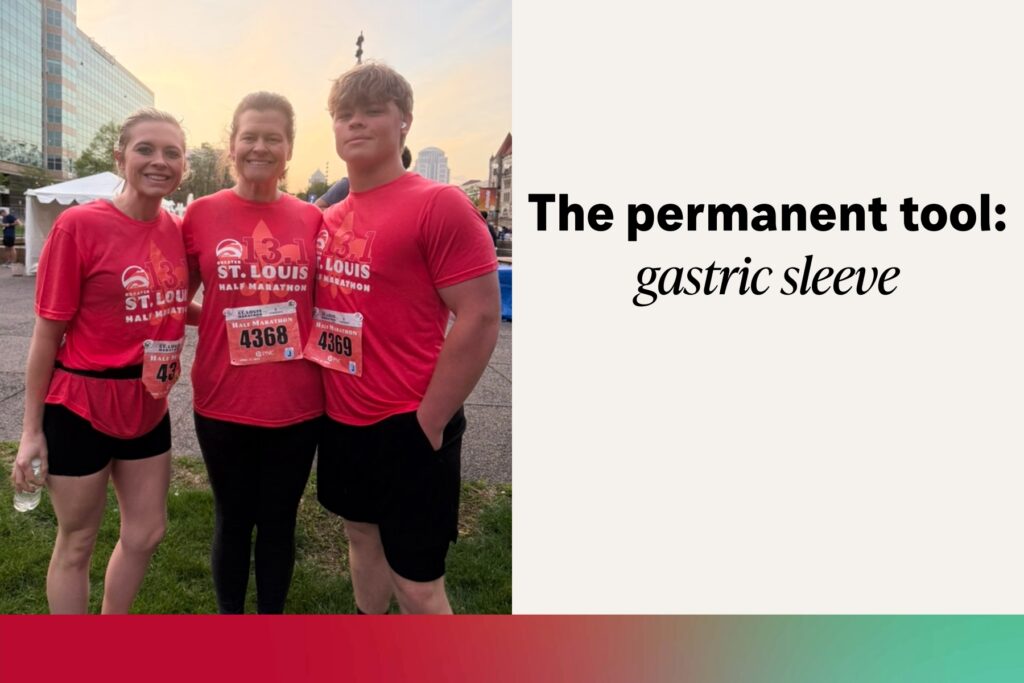
Jennifer Garland is a licensed therapist in the St. Louis region who had a bariatric surgery procedure on April 10, 2025. One year out from her surgery, she is happy to have lost over 70 pounds. Learn more about Jennifer’s journey and Danny Mou, MD, MPH, the WashU Medicine bariatric surgeon who helped her find a minimally invasive option that met her goals.
For most of her life, Jennifer Garland felt like she was fighting the same battle over and over again.
“I have battled obesity my entire life and I’ve been able to lose weight consistently with the help of tools,” Jennifer said. “I used phentermine several times and I would reach my goal weight and then it just wasn’t sustainable.”
Jennifer had once also had an intragastric balloon for six months and lost the weight but could not sustain it.
“I felt like I’d do a really good job with tools, and when the tool goes away is when I tend to struggle,” said Jennifer. “So I decided I wanted a permanent tool, and that’s when I began to consider bariatric surgery. It felt like that would be something both long term and sustainable.”
That decision brought her to bariatric surgeon Dr. Mou at WashU Medicine, where she ultimately chose robotic sleeve gastrectomy as a permanent tool.

The permanent tool
Before surgery, Jennifer tried nearly every traditional and medical weight loss option available. However, each time the tool went away, the weight came back.
Her pattern was clear: she did well with structured tools, but once those tools ended—whether a medication program or a temporary device—she struggled to sustain progress. Over time, she became increasingly aware that cycling up and down in weight was not healthy either, and began to look for a more durable, medically sound option.
When she began exploring bariatric surgery, Jennifer knew she wanted a long-term solution. At WashU Medicine, she met with Dr. Mou and went through the required multidisciplinary evaluation, including psychological assessment, nutrition counseling, and physical therapy. These steps helped ensure she was prepared and informed.
“I went with the robotic sleeve gastrectomy,” she says. “When Dr. Mou discussed options with me, that seemed to be the one that was the best fit for me based on what my goals were, so that was the surgery that I had.”
Robotic sleeve gastrectomy is a minimally invasive procedure that removes a portion of the stomach, creating a smaller banana-shaped stomach. At WashU Medicine, surgeons like Dr. Mou use advanced robotic techniques designed to enhance precision and support a smoother recovery.
As with other bariatric surgery procedures, the sleeve gastrectomy requires strict adherence to a maintenance plan tailored to the patient.
“Ms. Garland’s extraordinary success is in large part due to her compliance with the recommended post-operative diet and exercise,” Dr. Mou said. “Weight loss surgery is just a tool to jump start weight loss. Patients still have to practice healthy lifestyle choices to maximize the benefit of the surgery.”
Jennifer appreciated how collaborative the decision-making process felt.
“What I really liked about Dr. Mou was that during our consultation, he discussed the variety of options with me, as well as expectations,” Jennifer said. “I felt like I had the autonomy to make a decision that I thought was best for me based on the information he provided.”
After surgery, the changes were significant, both physically and emotionally. Jennifer describes a major benefit was a shift in her hunger cues.
“I have really enjoyed that the surgery eliminated the hunger aspect,” Jennifer said. “Before the surgery, I found I was hungry all the time, unless I had a tool to work with. So, I really appreciate that hunger not being there.”
Jennifer also described the mental relief and added confidence of being able to shed pounds and maintain a healthy weight.
“The surgery has also provided relief emotionally as well as physically,” she said. “The emotional weight of the physical weight had an impact on confidence.”
Athletic milestones and a family-wide impact
As her health improved, Jennifer returned to something she loves: moving more and moving faster.
“I’ve been able to run again whenever my weight is low,” said Jennifer. “I like to run in half marathons, and I was able to do that again in December when I completed the St. Jude half marathon. On Saturday, April 11, I also ran the Go St. Louis half marathon,” she says.
Jennifer says she is excited to have gotten back to running.
For the St. Jude half marathon, her 16-year-old son ran with her and then for the GO! St. Louis half marathon both her daughter and son joined her. Those races became major milestones in her health journey as well, representing meaningful family experiences.
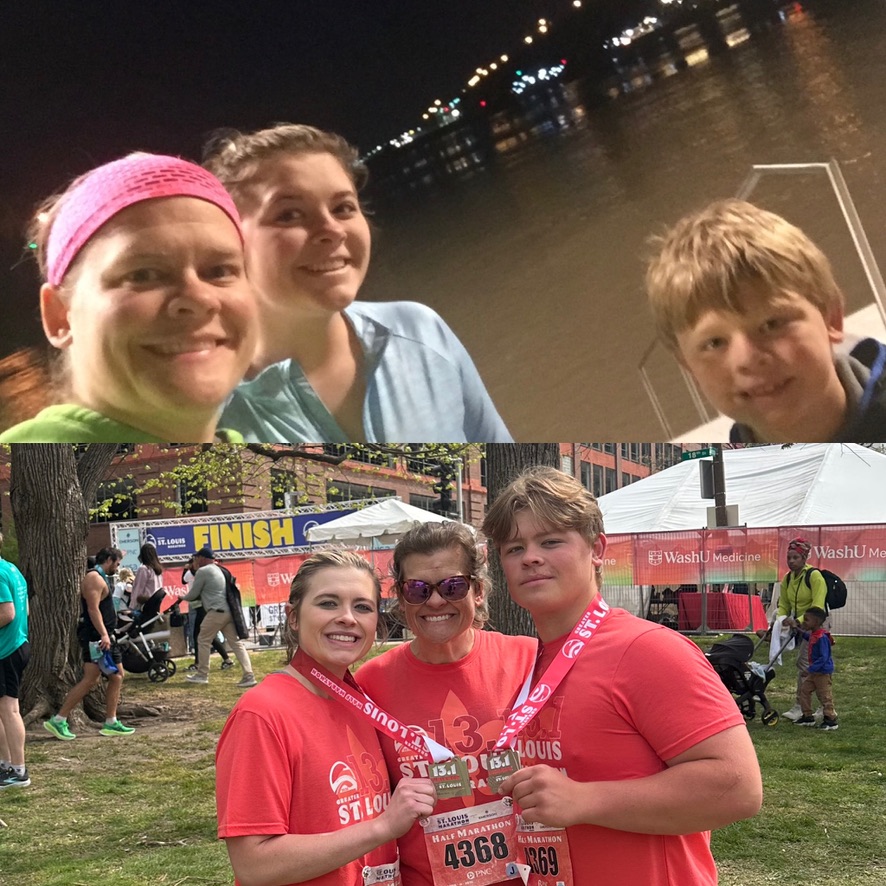
Bottom: Jennifer and her children after running the 2026 GO! St. Louis half marathon.
Jennifer shared before-and-after photos with the WashU team underscoring how far she has come. These athletic achievements reflect not only improved fitness, but a broader lifestyle change that has positively affected her children and family.
Through her recovery period and the first year after surgery, Jennifer felt deeply supported by Dr. Mou. The patient-centered focus—listening, educating, and giving her autonomy—was a defining feature of her experience at WashU Medicine.
Read more: Meet Dr. Danny Mou, weight loss surgeon>>
Expertise in weight loss surgery at WashU Medicine
Jennifer’s story illustrates the strengths of WashU Medicine’s bariatric surgery program: multidisciplinary preparation, advanced minimally invasive techniques, and long-term, personalized support. With robotic sleeve gastrectomy, she found the “permanent tool” she had been seeking after years of temporary fixes.
For others considering weight loss surgery, Jennifer emphasizes the importance of preparation and partnership with an experienced team.
Jennifer recommends making an informed decision. She found that combining her own research with Dr. Mou’s expertise allowed her to make a confident, informed decision about her care.
The weight loss surgery team hosts monthly seminars led by surgeons for those interested in finding out more about weight loss surgery.
Today, Jennifer measures her success not only in pounds lost, but in finish lines crossed, photos with her children at races and ballgames, and the lightness that comes from improved health and renewed confidence, supported by a patient-centered bariatric care team at WashU Medicine.