Colorectal cancer is the third most common type of cancer in both men and women.
The colon and rectum are parts of the large intestine in the digestive system. They work together to remove waste from the body. After food is digested and nutrients are absorbed in the small intestine, the remaining material moves into the colon. Water and salts are absorbed in the colon, and the remaining waste is stored in the rectum until it is expelled through the anus.
Colorectal cancer occurs when cells in the colon or rectum develop genetic abnormalities and multiply quickly, resulting in a tumor forming. Depending on where the tumor forms, it may be colon cancer or rectal cancer.
Colorectal surgeons at WashU Medicine

Our surgeons work with a team of other specialists to detect and treat colorectal cancer. Colorectal cancer experts at WashU Medicine offer the latest advances in treatment, which have been shown to improve outcomes for people with colon or rectal cancer.
Signs and symptoms
Recognizing the signs and symptoms of colorectal cancer can lead to early diagnosis and more effective treatment. Possible symptoms include:
- Changes in bowel habits, such as more frequent bowel movements
- Blood in the stool, which may be dark or bright red
- Fatigue
- Stools that are narrower than usual
- Abdominal pain, gas pains, cramping, or bloating
- Diarrhea or constipation lasting more than two weeks
- A feeling that the bowel is never fully emptied
Read more about colorectal cancer signs>>
Risk factors
Understanding the risk factors is crucial for prevention and early detection. These include:
- Age 50 or older
- History of colon polyps
- Family history of colon cancer
- High-fat, low-fiber diet
- Inflammatory bowel disease (ulcerative colitis or Crohn’s disease)
- Drinking alcoholic beverages daily
- Inactive lifestyle
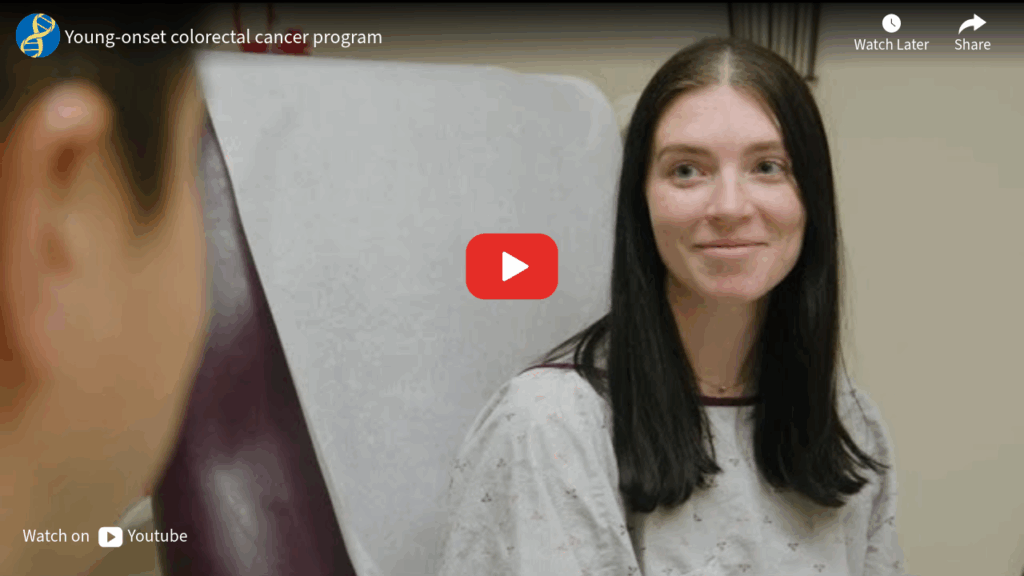
While colorectal cancer has historically been more common in older adults, more and more people under 50 are being diagnosed with colorectal cancer.
WashU Medicine and Siteman Cance Center have established a young-onset colorectal cancer program focused on providing the highest quality of care in a convenient and compassionate environment for people with colorectal cancer.
Testing and diagnosis
Screening tests can help detect colorectal cancer at an early stage, when it is most treatable. The five primary screening tests include:
- Digital rectal exam: A doctor inserts a gloved, lubricated finger into the rectum to palpate abnormalities.
- Fecal occult blood test: Stool samples are tested for hidden blood, which could indicate polyps or cancer.
- Sigmoidoscopy: A flexible, lighted tube is used to examine the rectum and lower colon. Polyps can be removed during this test.
- Colonoscopy: A longer instrument is used to inspect the entire colon. As with sigmoidoscopy, polyps and suspicious growths can be removed.
- Barium enema with air contrast: Barium sulfate is introduced into the colon via an enema, and X-rays are taken to highlight abnormal areas. Air may be added to expand the colon for better imaging.
Learn more about what happens during a colonoscopy>>
Read more: What to know about cancer screening guidelines in 2026>>

Exceptional cancer care
Treatment options
Treatment plans for colorectal cancer depend on the stage and location of the cancer, as well as the overall health of the patient. Common treatments include:
- Surgery: The most common treatment where the cancerous part of the colon or rectum is removed. Surgeons at WashU Medicine are experts in a minimally invasive procedure known as laparoscopic colectomy.
- Chemotherapy: Uses drugs to destroy cancer cells, often used when the cancer has spread.
- Radiation therapy: Uses high-energy rays to target and kill cancer cells. Typically used in rectal cancer.
- Targeted therapy: Involves drugs that specifically target cancer cell mechanisms with minimal damage to normal cells.
If you have any symptoms, concerns, or questions, it is important to speak with a doctor to find the care you need. Colorectal cancers are often very treatable in their early stages, and recent advances have improved outcomes for people with even more advanced forms of cancer.

Ask an expert
When should you start thinking about colorectal cancer?
We asked colorectal expert Dr. Paul Wise what you should know about colorectal cancer.