Irritable bowel syndrome (IBS) is a common disorder that affects the large intestine, causing symptoms such as cramping, abdominal pain, bloating, gas, and diarrhea or constipation. The exact cause of IBS is unknown, but it is believed to be a combination of abnormal gastrointestinal (GI) tract movements, increased sensitivity to pain, and changes in the gut microbiome. It may also be triggered by certain foods, stress, hormonal changes, and infection.
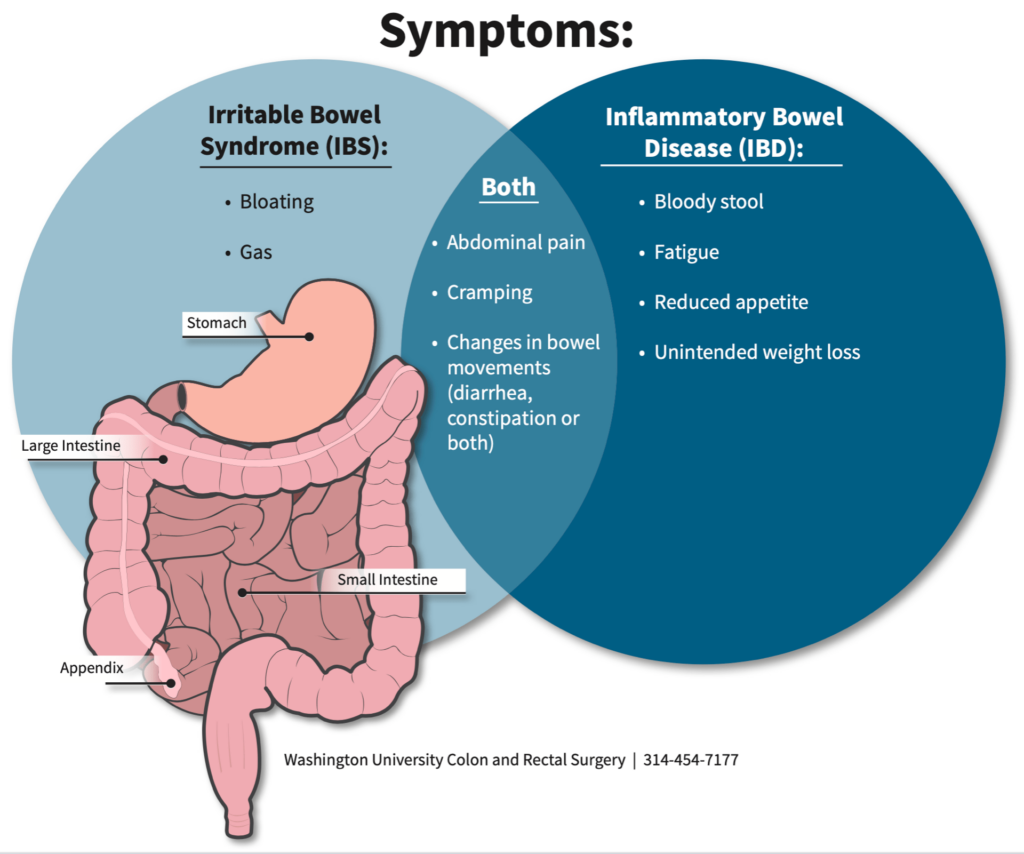
It is important to distinguish between Irritable Bowel Syndrome and inflammatory bowel disease (IBD), which are different gastrointestinal conditions. IBS is a functional disorder with symptoms like abdominal pain, bloating, and altered bowel habits but without inflammation or GI tract damage. It’s diagnosed based on symptoms and managed through diet, lifestyle changes, and medications. IBD, including Crohn’s disease and ulcerative colitis, is an inflammatory condition causing severe symptoms like diarrhea, abdominal pain, and weight loss, and can lead to tissue damage. Diagnosing IBD involves endoscopy, imaging, and lab tests, with treatments focusing on reducing inflammation through medications and sometimes surgery.
Symptoms
The names, abbreviations and symptoms of these conditions may be similar, but there are important differences between the two. Seeing a specialist who can provide testing and diagnosis is important for people who may have one of these gastrointestinal problems.
Irritable bowel syndrome does not cause visible damage to the digestive tract and may be treated with a combination of medication and lifestyle changes, which can provide long-term relief for some people. People with IBS may experience a wide range of symptoms, including:
- Abdominal pain or cramping, often relieved by a bowel movement
- Excessive gas and bloating
- Diarrhea, constipation, or an alternating pattern of both
- Mucus in the stool
- The urge to move the bowels immediately after eating
These symptoms can vary in intensity and may worsen during periods of stress or after eating certain foods. Symptoms typically persist for at least three months for a diagnosis of IBS to be considered.
Screening protocols and diagnosis
Diagnosing IBS can be challenging because there are no specific tests for the disorder. Instead, doctors often rely on a combination of medical history, physical examination, and certain laboratory tests to rule out other conditions.
- Medical history and symptoms: A detailed account of symptoms and their duration may help in diagnosing IBS.
- Physical examination: This can help identify any concerning signs that may suggest other underlying conditions.
- Laboratory tests: Blood tests, stool tests, and tests for celiac disease may be done to exclude other causes of symptoms.
- Imaging tests: Sometimes, imaging tests like a CT scan or colonoscopy are performed to rule out other conditions that can mimic IBS symptoms.
Treatment options
Managing IBS often involves a combination of lifestyle changes, dietary modifications, and medication. Here are the primary treatment strategies:
- Dietary changes: Identifying and avoiding trigger foods can help manage symptoms. A high-fiber diet can improve bowel function.
- Lifestyle modifications: Regular exercise, adequate hydration, and stress management techniques, such as yoga or meditation, may help reduce symptoms.
- Medications: Depending on symptoms, doctors may prescribe medications to relieve pain, reduce diarrhea or constipation, and address any psychological factors.
- Probiotics: These may help in balancing the gut microbiome and improving IBS symptoms.
- Psychological therapies: Techniques like cognitive behavioral therapy (CBT) and gut-directed hypnotherapy can be useful for managing IBS.

Surgical intervention
Surgical intervention is not typically recommended for IBS, as it is a functional disorder and not caused by any anatomical abnormalities that can be surgically corrected. However, in rare and severe cases where other treatments have failed, surgery may be considered to address specific symptoms, such as intractable pain or severe constipation.
However, managing IBD and Crohn’s disease requires a team of specialists. WashU Colon and Rectal Surgery offers a team-based approach that focuses on collaboration between patients, gastroenterologists and colorectal surgeons. The exact treatment is tailored for each individual patient.
If surgery is recommended, Washington University Colon and Rectal Surgery specialists will listen to your goals, discuss your options, and help you find the treatment that is the best fit for you.
Colon and rectal surgeons and gastroenterologists at WashU Medicine are leading experts in treating IBD and other colorectal conditions in the St. Louis area.
To request an appointment, please call 314-454-7177.
Expertise at WashU Medicine
WashU Medicine boasts an exceptional team of gastroenterologists and surgeons adept at managing IBS and IBD with a comprehensive, multidisciplinary approach. Our experts are at the forefront of research and treatment protocols, ensuring that patients receive the latest and most effective therapies available. Our commitment to personalized care means that each patient’s treatment plan is tailored to their unique symptoms and needs, providing hope and relief to those affected by this often-debilitating condition.
Understanding and effectively managing IBS can drastically improve a person’s quality of life. If you suspect you have IBS or experience any related symptoms, seek medical advice to explore the appropriate screening and treatment options available.