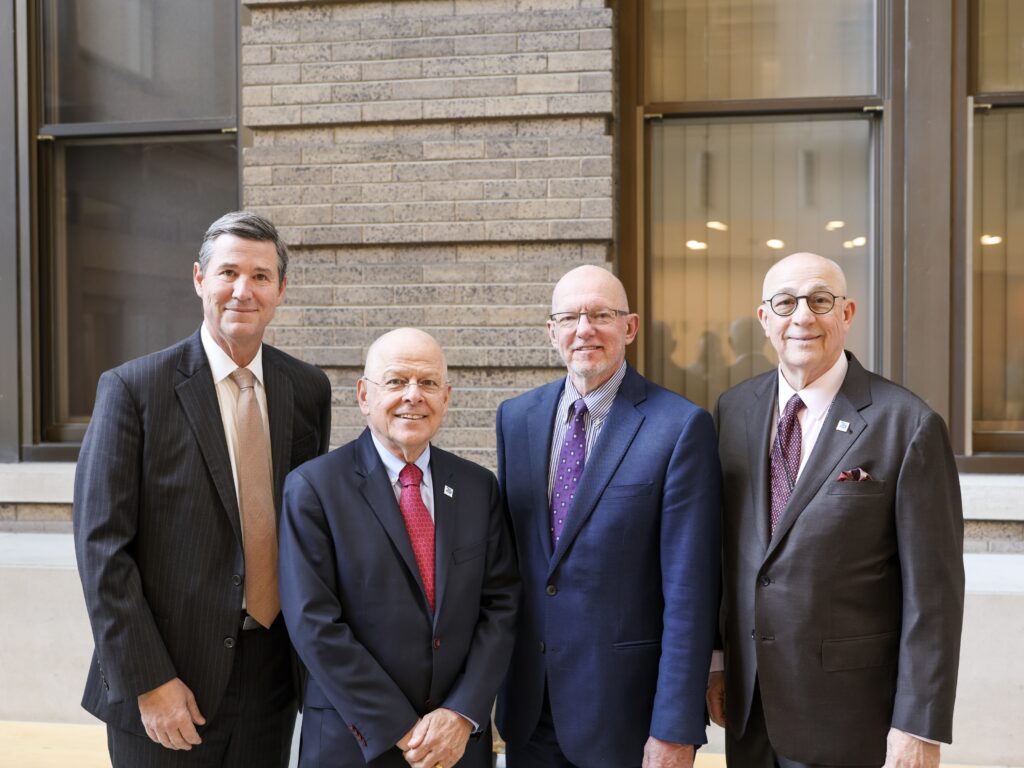
On October 13, WashU Medicine hosted the annual Dr. Timothy J. Eberlein Lecture. Ernest Hawk, MD, MPH, was the visiting professor, the vice president and head of the division of Cancer Prevention & Population Science at MD Anderson Cancer Center and is the T. Boone Pickens Distinguished Chair for Early Prevention of Cancer. The lecture was held at the Connor Auditorium in the Farrell Learning and Teaching Center at 4:00p.m.
John A. Olson Jr., MD, PhD, the Bixby Professor and chair of the Department of Surgery opened the event, welcoming the visiting professor and attendees, before inviting Graham A. Colditz, MD, DrPH, who is the Niess-Gain Professor of Surgery and the director of the Division of Public Health Sciences at WashU Medicine to give Hawk’s formal introduction.
“In 2006, when Dr. Hawk began building the division of Cancer Prevention and Population Sciences,” Colditz said. “He had the mission of reaching underserved communities throughout the state of Texas, which is no small task. It is a pleasure that he is able to share some of his insights from his varied career, ranging from colorectal prevention to cervical cancer elimination for the whole state. It is an added pleasure to have Dr. Hawk here to recognize Dr. Eberlein’s effort to establish the Division of Public Health Sciences at WashU Medicine.”
As a nationally recognized leader in cancer prevention, Hawk delivered the lecture, Cancer Prevention in Action: Research, Community Impact, and Innovation at UT MD Anderson, which outlined how large-scale prevention efforts can reduce cancer incidence and improve outcomes across entire populations. He argued that as many as one-third to one-half of cancers could be prevented through healthier lifestyles, evidence-based screening and effective public policy.
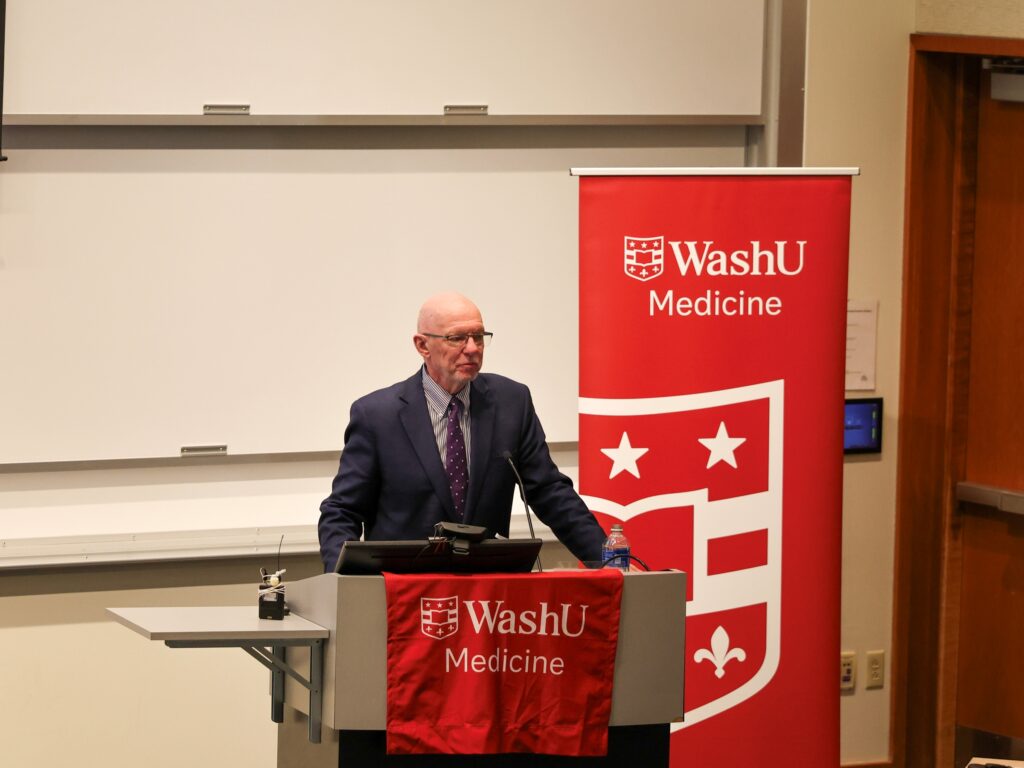
Hawk described how MD Anderson has integrated research, clinical prevention services, education and community outreach into a unified strategy. He highlighted innovative studies exploring smoking cessation, exercise interventions for people with inherited cancer risk, cancer prevention vaccines and blood-based biomarkers for early cancer detection. He also emphasized the importance of translating scientific discoveries into real-world health benefits, underscoring MD Anderson’s statewide commitment to reaching underserved populations
The lectureship honors Timothy J. Eberlein, MD, whose leadership helped elevate cancer care, research and education at WashU Medicine and beyond. The annual event brings distinguished visitors to St. Louis to discuss advances shaping the future of cancer care and prevention.