A kidney transplant is a surgical procedure performed to replace a diseased or non-functioning kidney with a healthy kidney from a donor.
This treatment is often necessary for adults with end-stage renal disease, where the kidneys can no longer function effectively.
A kidney transplant can significantly enhance quality of life and increase lifespan in patients with severe kidney failure.
Transplant surgeons at WashU Medicine
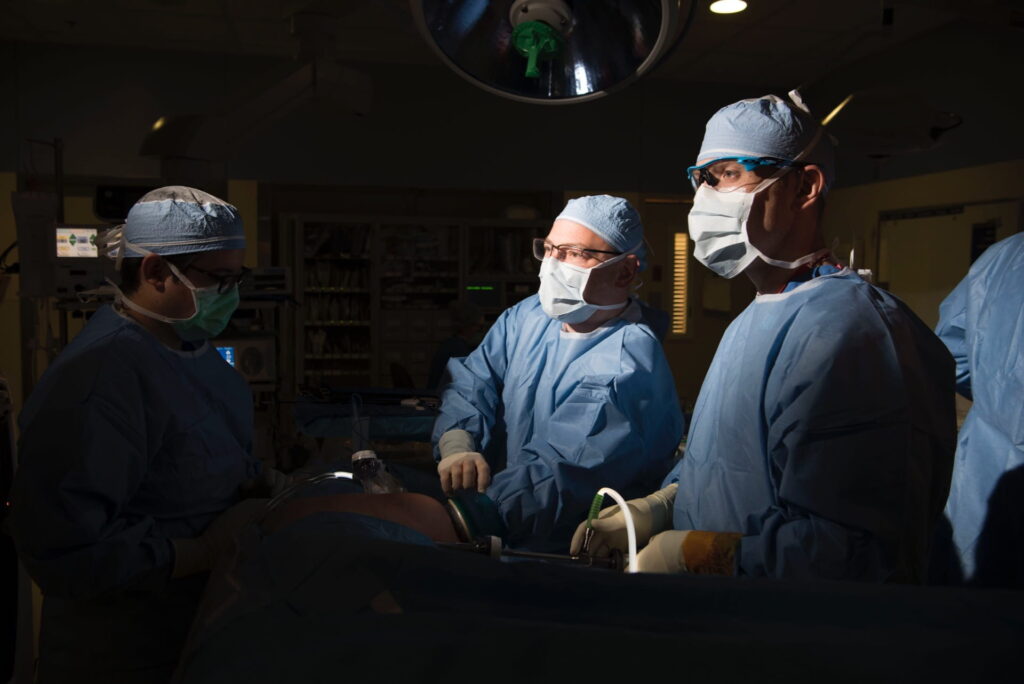
Our team of transplant surgeons at WashU Medicine has experience performing a high volume of kidney transplants with excellent results at the Washington University and Barnes-Jewish Transplant Center in St. Louis. We work with a multidisciplinary team of experts dedicated to your care.
Risk factors for kidney disease
Chronic kidney disease is a condition where the kidneys become damaged over time. This condition can lead to several serious health problems, including diabetes, high blood pressure, heart disease, and stroke.
When chronic kidney disease reaches its final permanent stage, this is called end-stage renal disease (or kidney failure).
- Diabetes: High blood sugar levels can damage the kidneys over time.
- Hypertension: High blood pressure can cause kidney damage.
- Genetic conditions: Diseases like polycystic kidney disease can necessitate a transplant.
- Lifestyle factors: Smoking, excessive alcohol use and poor diet can increase the risk of kidney disease.
Screening and diagnosis
Before being listed for a transplant, a thorough evaluation is performed to determine eligibility. This includes:
- Blood tests: to assess kidney function and overall health
- Imaging tests: such as ultrasounds or CT scans to evaluate kidney health
- Heart and lung evaluation: to ensure you can withstand surgery
- Psychological assessment: to make sure you are mentally prepared for the procedure and post-operative care
Patient-centered transplant care
The WashU Medicine and Barnes-Jewish Transplant Center is redefining what’s possible in transplant — offering more answers, more options and more hope to patients facing the most challenging diagnoses.
Watch: Transplanting hope>>

Treatment and surgical care
Kidney transplantation offers a new lease on life for many patients suffering from kidney failure.
Understanding the procedure, risks and postoperative care can aid in making an informed decision.
Regular medical visits and adherence to a healthy lifestyle are crucial for the long-term success of a kidney transplant. Always consult with your health care provider to discuss your suitability for a kidney transplant and to get personalized medical information.
Kidney transplantation involves several key steps:
- Preoperative care: This includes fasting, sanitation and administration of immunosuppressants before surgery.
- The procedure: A kidney transplant surgery can takes 4 hours or more. During surgery, the new kidney is placed in the lower abdomen and the blood vessels and ureter are connected.
- Postoperative care: After surgery, you stay in the hospital for a few days for close monitoring, to be sure the transplant was a success, followed by extensive outpatient visits.
Why choose WashU Medicine for kidney transplant
- Our team performs an average of about 250 kidney transplants per year, which is the highest volume in Missouri and one of the highest in the nation.
- We specialize in minimally invasive techniques that often result in less pain, shorter hospital stays, and quicker recovery.
- Our team includes all the specialists you need for transplant surgery, meaning you receive the care you need from a team of leading experts.

Did you know?
The kidney transplant program at WashU Medicine was established in 1963.
Our multidisciplinary team has a passion for providing the highest level of care for our patients. We meet weekly to discuss transplant patients, providing comprehensive care from initial testing and evaluation to long-term follow-up care after surgery.
Potential complications
While kidney transplants have high success rates, complications can occur:
- Rejection: The body’s immune system might reject the new kidney.
- Infection: The immunosuppressant drugs that help prevent rejection can make it harder for the body to fight off infections.
- Blood clots: After surgery, blood clots can sometimes form in the body.
- Health of new kidney: Sometimes the transplanted kidney may not function immediately and could require dialysis support.
Recovery and medication
Post-transplant, a comprehensive recovery regimen is vital:
- Immunosuppressants: Daily medications to prevent organ rejection.
- Regular check-ups: Frequent monitoring of kidney function and overall health.
- Healthy lifestyle: Adopting a balanced diet, regular exercise and quitting smoking are essential.
- Infection prevention: Stay vigilant against infections due to a weakened immune system.
Kidney transplant frequently asked questions
Kidney transplant is the treatment of choice for people with kidney failure.
This allows patients to stop dialysis, decrease fluid and diet restrictions, and enjoy a much better quality of life.
Being on the list means you are waiting for a non-living donor kidney to become available from a transplant center.
According to the National Kidney Foundation, it is difficult to predict how long a person will be on the waiting list, but, on average, waits of two years or more are normal.
A patient can be on multiple lists. One of the criteria usually is that you are able to travel to the transplant center within 6 to 10 hours. This may slightly increase your chance of getting a transplant.
Everyone on a regional list also is on a national list kept by the United Network for Organ Sharing (UNOS). This means that when your nephrologist places you on his/her transplant center’s list, you also are placed on the national list kept by UNOS.
When a kidney becomes available in any area, information is sent to UNOS and a list is generated of people who potentially would be recipients for that kidney. If the kidney is a perfect match for someone on the national list, it will be offered to that person no matter where they are located.
Usually, a perfect match is from a brother or sister, but sometimes it is from the national registry.
The chance of getting a perfect match from a living-related brother or sister is much higher than from the national registry.
Antibodies are proteins your immune system makes when it comes into contact with something foreign to your body.
Antibodies protect your body. When you get an infection, such as a cold or an infection from a wound, your body makes antibodies to fight that infection.
When you have an organ transplant, your body reacts as it would to an infection. Thus, your antibodies try to destroy the organ.
Some people have a lot of antibodies, and it is harder to find an organ match.
There are two sources for kidney transplants.
One is from a living donor, and the other is from a non-living donor.
Patients who have had kidneys donated from living donors usually have higher success rates than those who receive organs from non-living donors, since there is less chance for rejection.
A living donor must be in good health and free from diabetes, high blood pressure, cancer, kidney or heart disease.
Living donors are usually between 18 and 60 years old. The living donor must undergo a series of tests to determine if they are truly compatible with the recipient. The decision to become a living donor is completely voluntary, and the donor can change his or her mind at any time. Living donors sometimes feel pressure from their families or guilt if they are reluctant to go through with the procedure. They also may feel angry if the recipient’s body rejects the donated organ. Living donors should discuss their feelings with a transplant professional before making a final decision.
Typically, the donor is admitted to the hospital the day before the kidney donation for all the necessary tests.
Shortly before the operation, an IV line is connected to a vein in the donor’s arm for medication and fluid. A catheter is inserted to drain urine from the bladder.
The kidney is removed, and the donor then proceeds to recovery. Several hours after the operation, the donor is encouraged to walk around.
The IV and catheter remain in place for a few days. As soon as the donor is able to eat and drink, the IV is removed. Typically, the donor goes home 5 to 8 days after donation.
Kidney donors can usually return to work in about four weeks.
There are risks involved in any surgery.
All patients have some pain after the operation, and it is possible for donors to develop infections or bleeding. Living donation also may have long-term risks, and it’s important for both the donor and recipient to know what these are.
There are also benefits to kidney donation.
Living donation keeps the recipient off the national waiting list.
Surgery can be scheduled at a planned time rather than as an emergency operation.
The recipient also can start taking anti-rejection drugs two days before the surgery to decrease the risk of rejection.
Transplants from living donors are usually more successful because there is a better tissue match.
There is also a psychological benefit. The recipient can feel better knowing that the gift came from a loved one, and the donor knows they have made a tremendous contribution to the life of the recipient.
Insurance typically covers 100 percent of the donor’s expenses.
