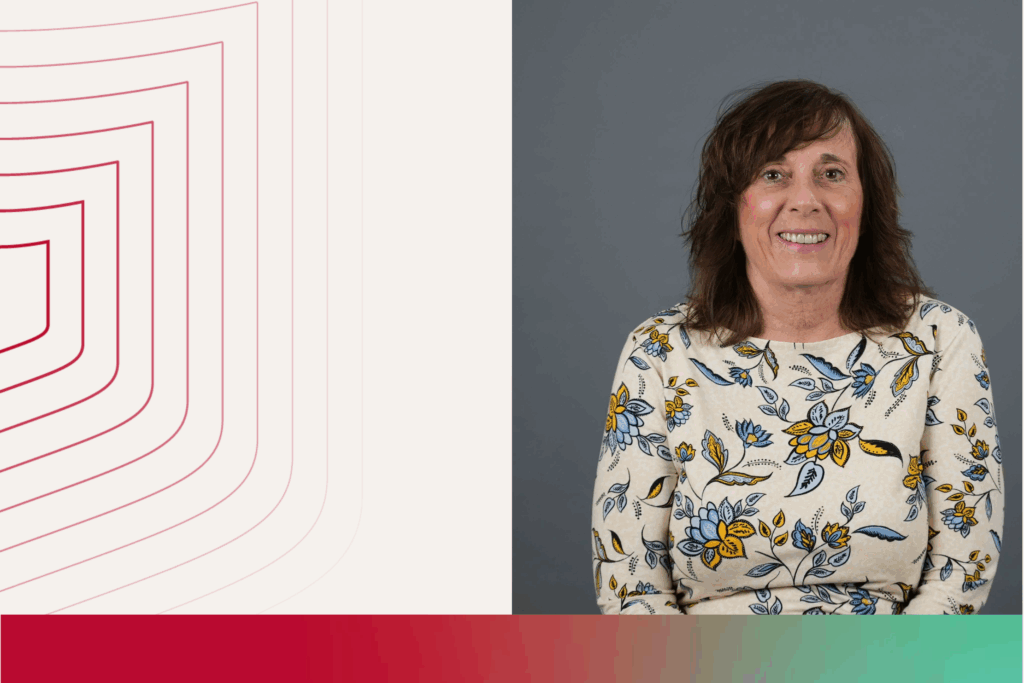
In 2025, Theresa Belgeri celebrated 45 years of dedicated service at WashU Medicine. A native of St. Louis, Theresa has provided crucial clerical and administrative support across various divisions within the Department of Surgery. Her work has ranged from aiding clinical faculty, to supervising clinical staff medical assisting, to now supporting a division geared towards researchers. In her most recent role as program coordinator for the Division of Surgical Sciences in the Department of Surgery, her work has greatly contributed to medical innovation, collaboration, and an influx of research grant submissions. She has maintained an exceptional track record of diligent administrative support all while still balancing family life and maintaining long-term friendships.
Theresa began her career path in health care administration at City Hospital, which is no longer in service, and in May 1980, through professional connections made there with WashU affiliated care providers, began working with pediatric neurology. She worked in the Division of Pediatric and Developmental Neurology at WashU Medicine for two years before transferring to the Department of Surgery. At the time, orthopedic surgery was a division within the Department of Surgery.
“I worked in orthopedics until ‘89, when I started working in vascular surgery,” Theresa said. “I worked with them until 2000.”
That year Theresa returned to orthopedic surgery, transcribing medical dictations. The department allowed medical transcriptionists to work remotely. At that time, Theresa had two small children, and her husband had his own business to manage.
“I kind of took a step back to work remotely in that position,” Theresa said. “This opportunity allowed me to spend more time with my family and the flexibility to pick up my kids when they were sick or out of school for snow days or teacher meetings.”
Finding balance nurturing family and career
With that transition, Theresa was able to arrange her work hours around her family’s schedules and take her children to their baseball or soccer games, striking a work-life balance.
“It was nice to be a WashU employee but still have that flexibility to be present and raise my children,” Theresa said.
Once her children grew older, Theresa returned to an active office position in 2014 within the Division of Vascular Surgery. Having prior experience in grant preparation, she started working with Mohamed Zayed, MD, PhD, MBA, a surgeon-scientist and professor in the Division of Vascular Surgery, who is now the director of the Division of Surgical Sciences, collaborating on large-scale projects such as the Vascular Surgery BioBank and the CardioVascular Research in Surgery and Engineering (CVISE) Center.
After years of supporting him to balance his clinical and research workflows, arranging collaborative scientific meetings, and assisting with grant application submissions for vascular surgery research, Theresa shifted part of her effort to supervise more than 20 medical assistants and administrative secretaries in the Division of Vascular Surgery in 2021. In that role she was able to help manage schedules and facilitate opportunities for quick turnaround response to new clinical referrals. In 2024, Theresa then transitioned her full-time responsibilities to the newly established Division of Surgical Sciences. This division aims to sustain a culture of interdisciplinary science, innovation, and collaboration between surgeons, basic-translational scientists, and other research staff. Theresa’s career at WashU Medicine exemplifies her dedication to both professional excellence and family.
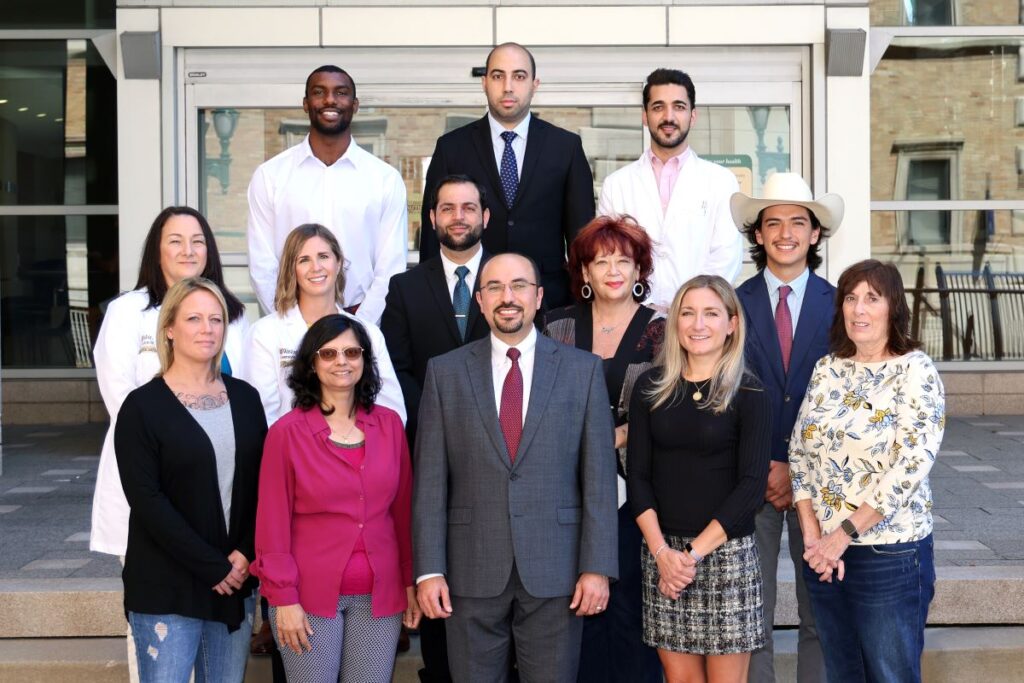
Part of Theresa’s role in the Division of Surgical Sciences is to arrange monthly seminars, which the division hosts to promote projects they seek to sponsor and to garner interest.
“While arranging preparations for seminars in meetings with Dr. Zayed, I’ve gotten to meet a lot of the PhDs doing research in our institution,” said Theresa. “Many of them design life-saving medical devices, and it’s really exciting to know that these can one day be used somewhere else around the world.”
Getting the new division up and running has been a major point of pride for Theresa during her tenure. Her comprehensive expertise in submitting grant applications has made her partnership with Zayed indispensable for the success in establishing the division.
One project that fascinates Theresa is dedicated to developing an implantable device to assist patients living with diabetes that will allow individuals to produce their own insulin.
“Theresa is a one-of-a-kind person – not only is she a skilled administrator, but she has been an amazing companion through the years,” Zayed said. “Her professionalism, diligence, attention to detail, and excellent attitude, make it a pleasure to work with her. I have been exceptionally fortunate to work with her for the past decade, and she has become an essential member of our team.”
Pastimes along the way
Theresa has nurtured life-long friendships while working in the Department of Surgery. The pace at WashU Medicine provided her with the opportunity to maintain a healthy balance and nurture the key personal aspects of friendship and family.
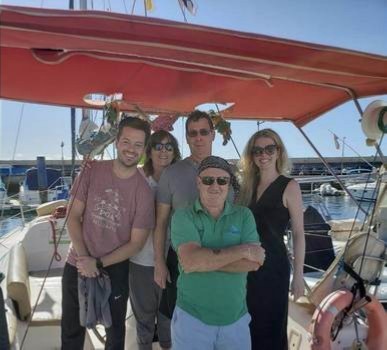
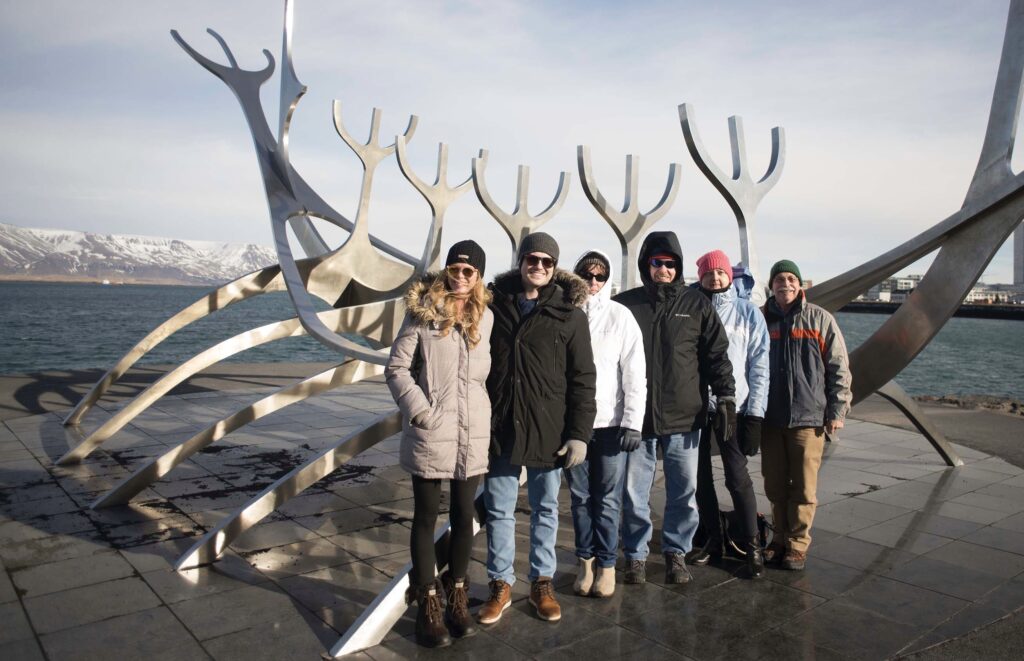
“I’ve met so many people that I’ve worked with over the years, and we stay in touch,” Theresa said. “Some of them have moved on or retired but we’ve stayed good friends. I’ve gone on vacations together with some of them, done trips together, and been invited to some of their weddings as well.”
Theresa explained that at one point she would get together with colleagues and coworkers once a week to play soccer or softball. This pastime gave Theresa and her colleagues a way to bond outside of the confines of the workplace in a healthy way.
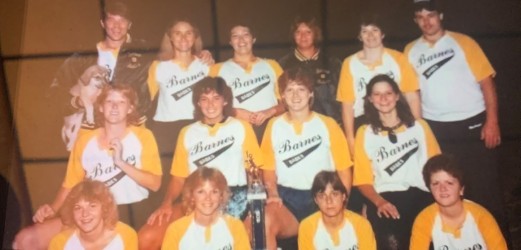
“In the past, there was a hospital softball league,” said Theresa. “We were called the Barnes Babes, but unfortunately that went away. I think it would be great if they brought that back, it was a great team-building experience.”
Theresa advocates for staying active and enjoying sports during down time with friends and family. She encourages reintroducing a program for WashU Medicine personnel to get active for both physical and social health.
Evolving procedures & cityscape
Theresa witnessed and participated in several technological upgrades and updates for recordkeeping and clerical procedures.
From hand-written to word processor-assisted transcription, Theresa has stayed up to date with all the latest technologies as they developed for everything from drafting manuscripts to recordkeeping, to inter-office and long-distance correspondence.
“When I started, we were using electric typewriters,” said Theresa. “They used to have something called a MagCard, which could store up to 8,000 characters. For everything else, you had to retype whole manuscripts and grant applications (which were 100 pages or more). Later we used a program called WordPerfect before Microsoft Word became the standard.”
Theresa welcomed the change in access to word processing technology, which aided in the timely delivery of office items from medical notes on patients, to memoranda, to grant proposals. She explained that in the past, all medical notes needed to be transcribed by an administrator or office assistant, until the word processing programs became widely adopted as the standard.
“In the past, doctors didn’t know how to type,” Theresa said. “We would take notes via shorthand or receive dictation via microcassette that we would then type up. Now doctors type their own draft and send it electronically for us to proofread and finalize.”
Along with the many technological innovations adopted by WashU Medicine, Theresa also witnessed the steady development of the medical campus and the surrounding urban area.
“Our office used to be in Queeny Tower, which doesn’t exist anymore,” Theresa said. “That was on the corner of Kingshighway and Barnes Hospital Plaza. There were patient rooms, doctors’ offices, and a little restaurant on the top floor. That building was demolished, and the replacement building has recently opened.”
Theresa also discussed the roads around the medical campus. She reminisced about the continued expansions and redesign, remarking on how so many of the roads are no longer navigable within the campus.
“It has felt so sudden sometimes,” Theresa said about the rate of construction. “Some of the buildings I’ve never been inside of, but it feels like you look up and there’s a new one. You ask yourself, when did that get there?”
On the horizon
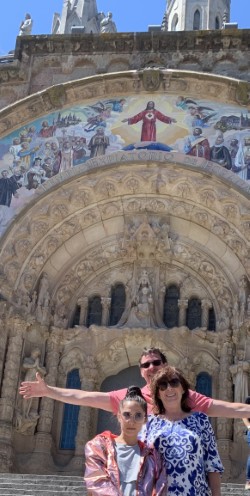
Theresa has two adult children now – a son who lives in Chicago and a daughter who lives overseas. She says that she has visited her daughter in the European Union three times.
“My daughter has lived in Barcelona for five years,” Theresa said. “She says that she loves it there and that she’s never coming back.”
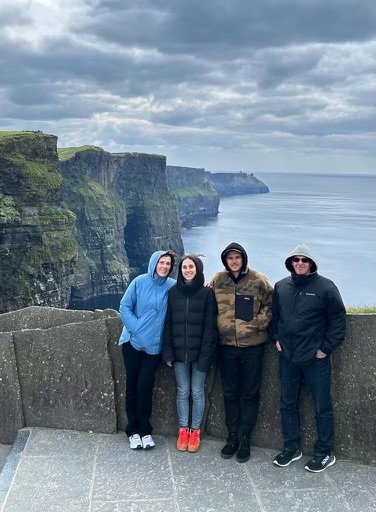
Theresa says that she and her daughter pick a different country in the European Union to visit and spend time vacationing together.
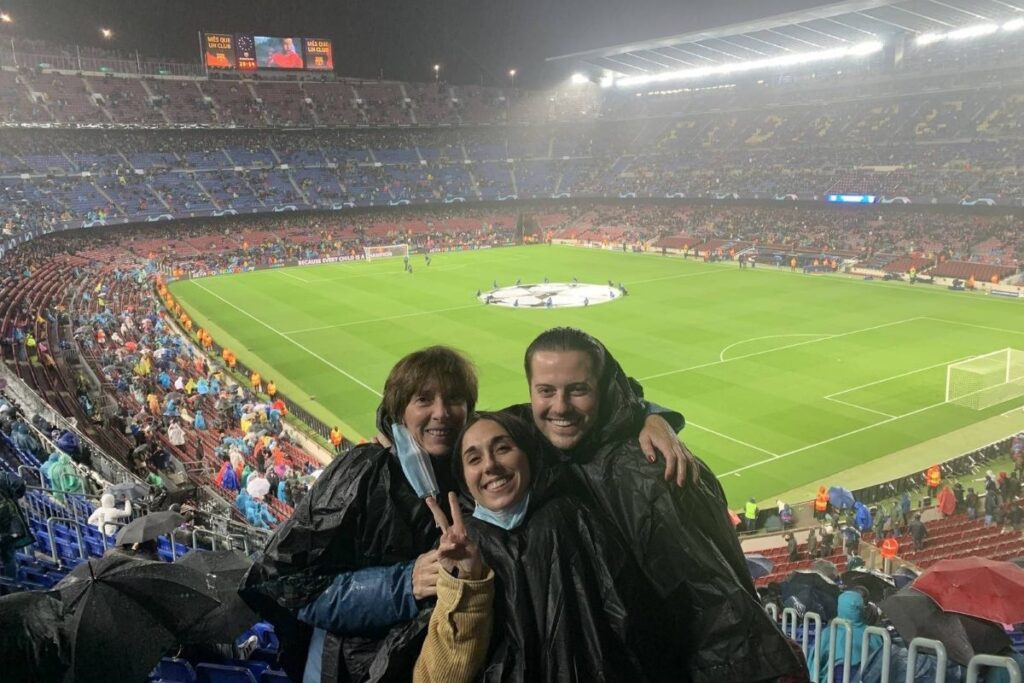
“I traveled to Portugal in September, and she met me there,” Theresa said. She quipped, “I’ll see if I love it as much as my daughter loves Barcelona and maybe I’ll stay.”
Theresa continues to serve in her position, working remotely most days as office coordinator for the Division of Surgical Sciences, as program administrator for CVISE, and administrative assistant for the Vascular Surgery BioBank.