Advancing the field of minimally invasive surgery
The Section of Minimally Invasive Surgery at WashU Medicine is at the forefront of innovation in laparoscopic and robotic surgery, surgical training, and research. Established in 2007, the section has developed and adopted the latest techniques and technologies to improve surgical care.
Our surgeons focus primarily on three service areas: bariatric surgery, esophageal and foregut surgery, and hernia repair and abdominal wall reconstruction. Surgeons in each area utilize minimally invasive approaches—from endoscopy to laparoscopic and robotic surgery—that are associated with reduced pain, shorter hospital stays and quicker recovery times than traditional open surgery. Highlights of our clinical programs include:
- Nationally accredited in bariatric surgery by the American College of Surgeons Metabolic and Bariatric Surgery Accreditation and Quality Improvement Program
- Hernia Center at WashU Medicine—a regional referral center for complex and recurrent hernias and abdominal wall reconstruction
- Region’s first laparoscopic cholecystectomy, Nissen fundoplication, Heller myotomy, and adrenalectomy
Our research focuses on improving outcomes, developing novel approaches to minimally invasive surgery, and enhancing surgical education. Our investigators aim to advance research, education and patient care in minimally invasive surgery through the Washington University Institute for Minimally Invasive Surgery, established in 1993.
Our faculty play an integral role in surgical training for medical students, residents, fellows and other learners. The Washington University Institute for Minimally Invasive Surgery served as the foundation for one of the first formalized surgical skills training curricula in the nation. The Washington University Institute for Surgical Education offers simulation training that ranges from fundamentals to robotic surgical skills and trauma exposure. Additionally, the section offers an advanced gastrointestinal/minimally invasive/foregut surgery fellowship, established in 2003 and administered by the Fellowship Council.

High clinical volume

Advanced training

Innovative research
Section chief
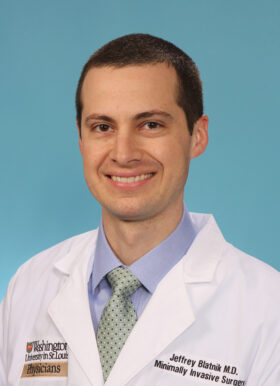
Jeffrey A. Blatnik, MD
Chief, Section of Minimally Invasive Surgery
Associate Professor of Surgery
Division of General Surgery
Director, WashU Medicine Hernia Surgery Center
Director, Institute for Minimally Invasive Surgery
- Phone: 314-454-8877
Learn more: Blatnik named chief of minimally invasive surgery
Patient care
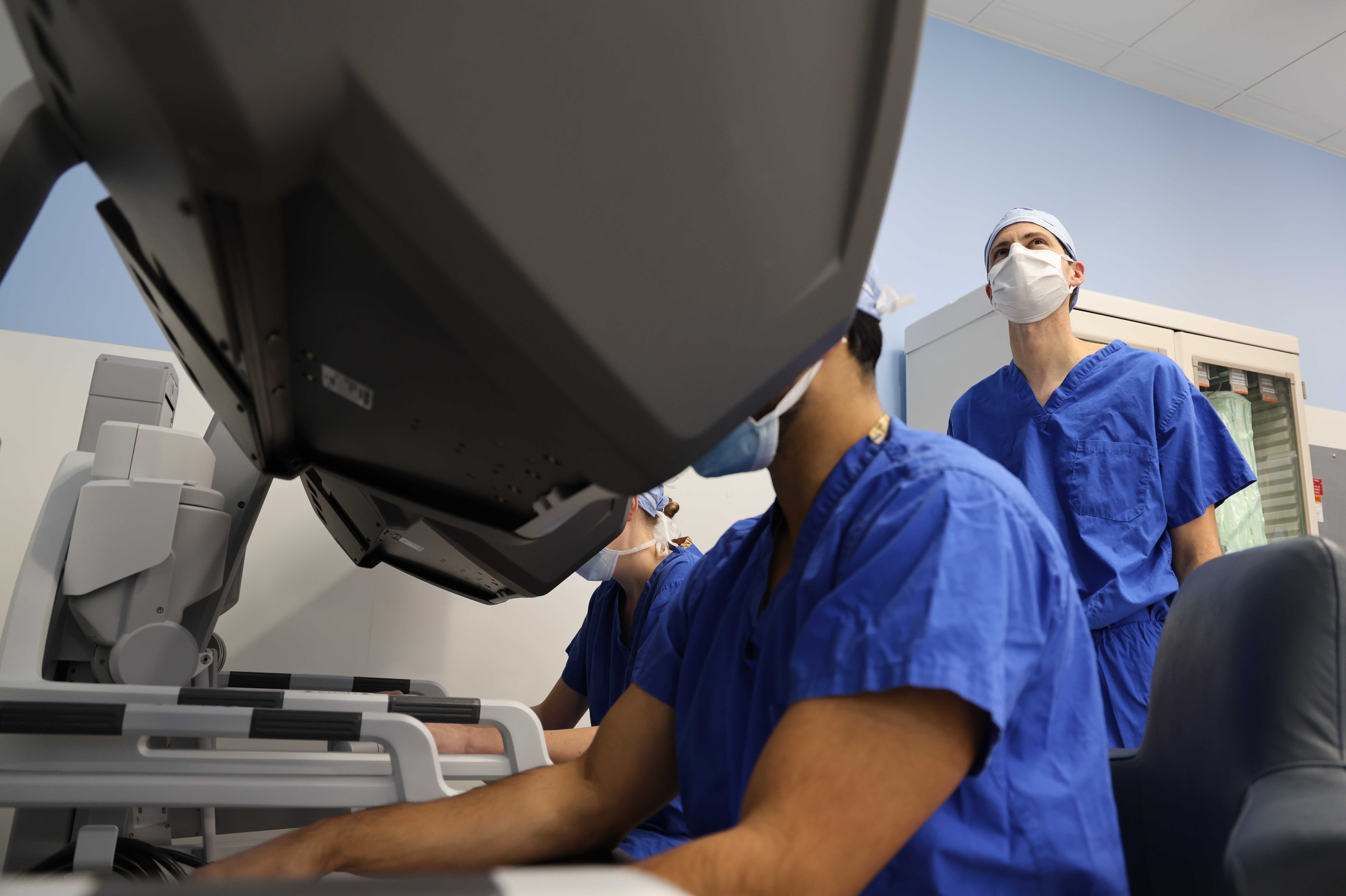
Minimally invasive surgeons at WashU Medicine perform procedures with smaller incisions, reducing physical trauma, pain and recovery time. Our surgeons are leading experts in the use of laparoscopic and robotically assisted surgery. They specialize in weight loss surgery, hernia repair, and esophageal and foregut surgery.
Bariatric (weight loss) surgery>>

Education
Our section trains general surgery residents in minimally invasive approaches and offers an advanced GI/MIS/foregut surgery fellowship. The one-year fellowship, administered by the Fellowship Council, accommodates two clinical fellows each year. Fellows gain exposure to a high clinical volume while working alongside national leaders in the field.
Research
Research in the section focuses on outcomes for minimally invasive procedures, metabolism in patients with overweight and obesity, development and testing of biomaterials in hernia repair, and surgical education curriculum development. Investigators from the section collaborate with researchers from across WashU Medicine to advance discovery and clinical innovation.
Learn more about the Institute for Minimally Invasive Surgery>>
Our faculty
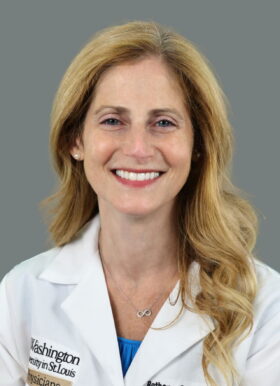
Bethany C. Sacks, MD, MEd
Associate Professor of Surgery
Division of Minimally Invasive Surgery
Director, Integrated Surgical Clerkship for Medical Students
Associate Program Director, General Surgery Residency
- Phone: 314-454-8877