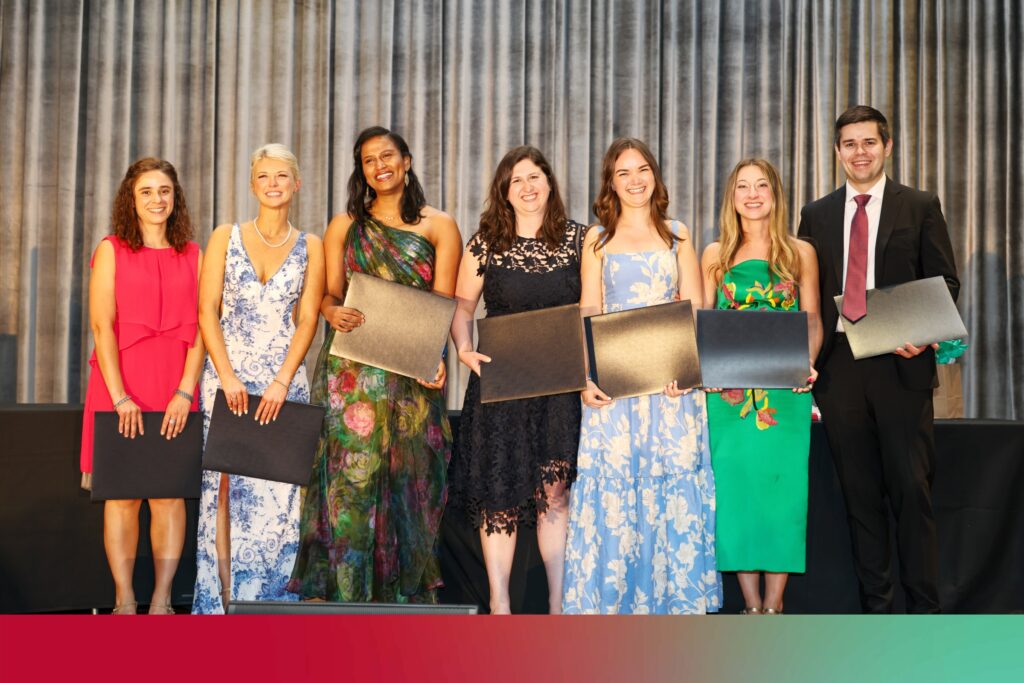
On June 26, the Division of General Surgery celebrated the graduation of 7 residency trainees, recognizing their accomplishments in training. Faculty, trainees, family members and colleagues gathered to honor the graduates and recognize their academic achievements, as well as to present accolades to the educators who have helped prepare the next generation of leaders in general surgery.
Congratulations to the graduating chief residents:
- Cameron Casson, MD
- Hannah Phelps, MD
- Tsehay Abebe, MD, MPHS
- Julie Clanahan, MD, MHPE
- William Gerull, MD
- Merrill Rubens, MD
- Hailey Shepherd, MD
In the weeks leading up to graduation, general surgery residency chiefs present insights and impart wisdom to the rising classes of trainees prior to graduation proceedings. The academic events wrapping up the graduation season include the Graham Lecture, which was presented on June 24 by the Evarts A. Graham visiting professor, Jeffrey Matthews, MD, who is the chair of surgery at the University of Chicago. His address was titled Advocacy and Activism in Academic Surgery: Through the lens of the Chicago Principles on Free Expression. The Graham Lecture is designed to give graduating residents a final bit of perspective as they enter the next chapter of their career in surgery.
Chief Talks
The graduation season began on May 27 with Chief Talks, the annual lecture series in which graduating chief residents impart words of wisdom to rising residents and reflect upon their own academic journeys, musing on the future of their own careers. Each talk was prefaced with an introduction by Jennifer Yu, MD, MPHS, the program director of the general surgery residency, continuing the tradition of quoting from their personal statements for their residency application, while adding some context from their letters of recommendation; a tradition established by Paul Wise, MD, the former program director and current vice chair for education in the Department of Surgery.
The series of talks from chief residents started on May 27 with Hailey Shepherd. In her talk, Dr. Shepherd shared insights about her path learning to live fearlessly and with persistence throughout her time working as a sushi chef and how that carried over through her time in medical school and surgery training. She underscored the importance of craftsmanship, deliberate practice, curiosity, embracing failure as part of learning, meticulous preparation and persistence in developing surgical excellence. Dr. Shepherd stressed the importance of being receptive to learning with a humble outlook during the duration of training, while holding oneself to the high caliber of one’s mentors. In her talk she emphasized the great impact that small moments can have along one’s path, alluding to the butterfly effect. After graduation she will continue her training in the thoracic surgery fellowship in the Division of Cardiothoracic Surgery at WashU Medicine.
Chief Talks continued with Tsehay Abebe and Merrill Rubens on June 3. In her talk, Dr. Abebe shared insights from her time in training. She made note of the importance of knowing when to ask for help and managing anxiety, a lesson she learned during her PGY-2 year. Additionally, Dr. Abebe shared details about the support she found in community, through her faith community as well as the minority community and among her Ethiopian colleagues. She shared details about her time in residency, in which the only member of her family in the states was her grandmother, who travelled to the U.S. to receive medical treatment. She rounded out her talk with some humor about the proper spelling and pronunciation of her first name, using a song by The Wiggles. Dr. Abebe will be starting minimally invasive surgery fellowship training at Wake Forest University this fall.
Rubens emphasized the sense of joy in the challenge involved in surgical training. Her talk focused on her strategies for recharging along the way in the marathon of general surgery training. Her talk centered on the essential nature of outdoor activity for recharging, citing several studies. She shared a curated list of outdoor locations in the St. Louis region that served as respite during residency. Dr. Rubens also shared some regional landmarks that she enjoyed on her very limited time outside of the operating room. She also emphasized the importance of making space for hobbies, which she revealed that hers is dogs. During her residency training, Dr. Rubens revealed that she had fostered nearly 20 dogs. Dr. Rubens will be starting colorectal surgery fellowship training at the University of Louisville this fall.
On June 10 the chiefs lecture series continued with Will Gerull and Julie Clanahan. In his talk, Dr. Gerull shared a reading list of books that helped shape his residency, with insights gained from each one. The books shared the theme of learning to and consistently performing at a high level in a changing and demanding environment while remaining intentional about one’s development. He discussed the question of prestige versus fulfillment in one’s career, and the ultimate satisfaction of choosing the path that derives most joy. He also discussed becoming technically proficient, by self-identifying as someone who deliberately practices, and served as a foundation for driving a consistent positive behavior. He also emphasized the value of quiet traits such as listening intently as a valuable aspect of learning, referring to observation as a superpower in surgery. Dr. Gerull will be returning to the University of Washington for minimally invasive surgery fellowship training this fall.
Dr. Clanahan shared insights on overcoming major life obstacles that seem impassible. Her vulnerability in this talk was inspired by another female surgeon, whose lecture, discussed the difficulties of private life and the critical steps essential for recovery. She also shared words of encouragement from her father, a fellow surgeon, who warned of hitting walls and assured her that with persistence these obstacles can be overcome. Dr. Clanahan humbly shared details of personal challenges during a difficult time in her academic career, coinciding with COVID era isolation. She gave context through athletic practice as a method of overcoming the metaphorical walls she faced during residency. She also emphasized the essential nature of needing to put one’s own health first, refueling, and sharing with those who offer support. Dr. Clanahan will be staying at WashU Medicine for colorectal surgery fellowship training with the Section of Colon and Rectal Surgery at WashU Medicine.
Rounding out the series of chief talks on June 17, were the administrative chiefs, Hannah Phelps and Cameron Casson. Phelps reflected on the most formative moments during residency, which occurred on third shift rotations at 3 a.m. She attributes the technical proficiencies gained throughout residency to the notion of showing up, developing confidence, learning accountability. She remarked on the value of gaining proficiency through action – something that didactics alone will not teach. Phelps discussed gaining confidence through observation, borrowing the confidence of mentors before owning it for oneself. She concluded that confidence requires decisiveness in the midst of uncertainty, which requires the ability to recognize danger and knowing when to ask for help. The final lesson she discussed was on the weight of responsibility. Phelps discussed how a surgeon must have accountability without paralysis, musing on following through in the operating room as a means of learning accountability. Phelps will enter pediatric fellowship training in the Division of Pediatric Surgery at WashU Medicine in the fall.
Casson’s talk was a celebration of her collaboration with peers and faculty as experienced through music. She reflected on the power of music to create connection, resilience and joy throughout the demanding journey of surgical residency. Drawing on stories from her lifelong love of sports, family traditions, musical theater and the operating room, Casson described how music fostered teamwork, lifted morale during difficult overnight shifts and created lasting memories with colleagues. She encouraged her fellow graduates to appreciate the small moments that sustain them through training, embrace each stage of their professional and personal growth, and lean on one another during challenging times. Casson expressed gratitude for the shared experiences that defined their seven years together and prepared them for the next chapter in academic surgery. Casson will be starting minimally invasive surgery fellowship training at the University of Wisconsin this fall.
Graduation banquet
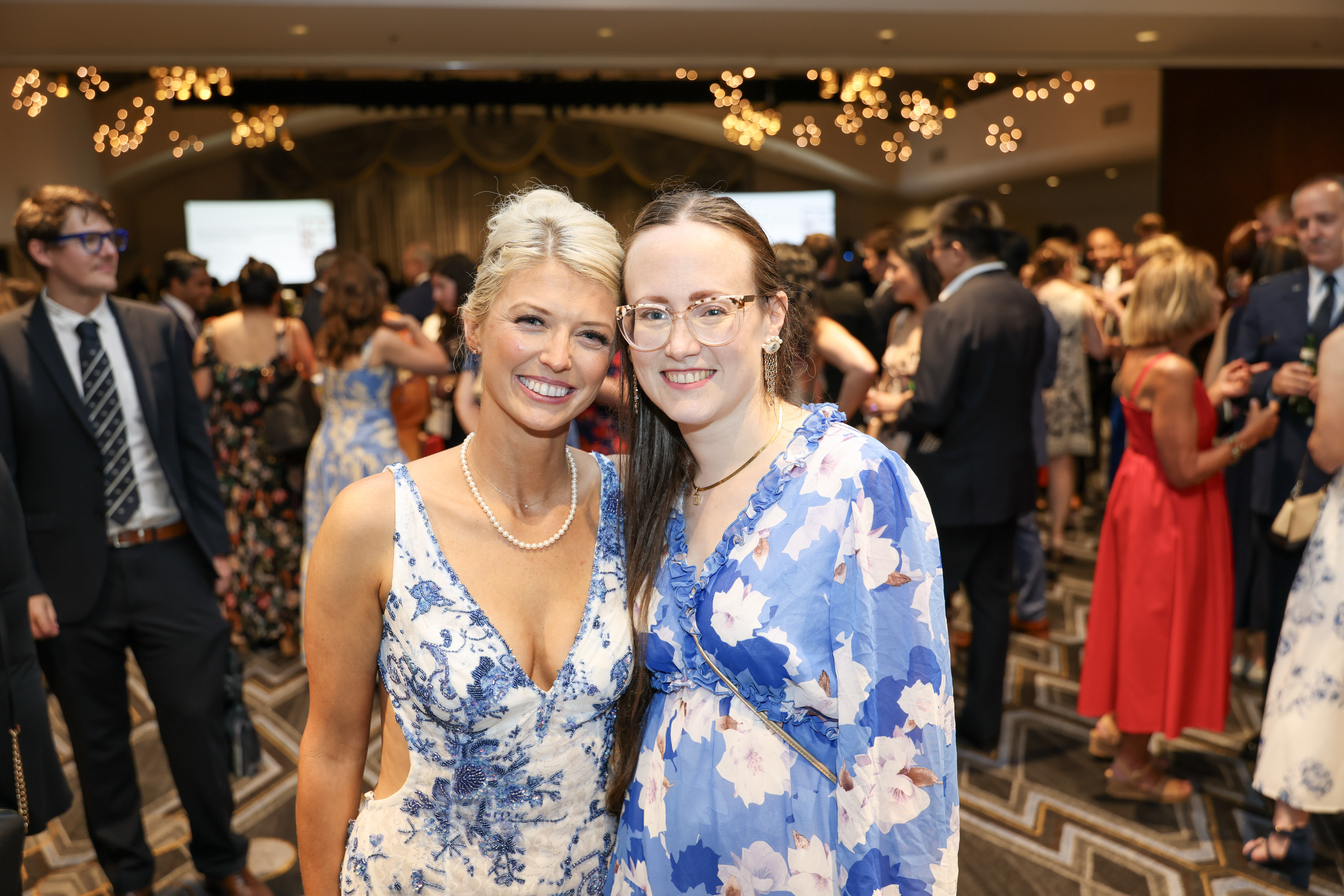
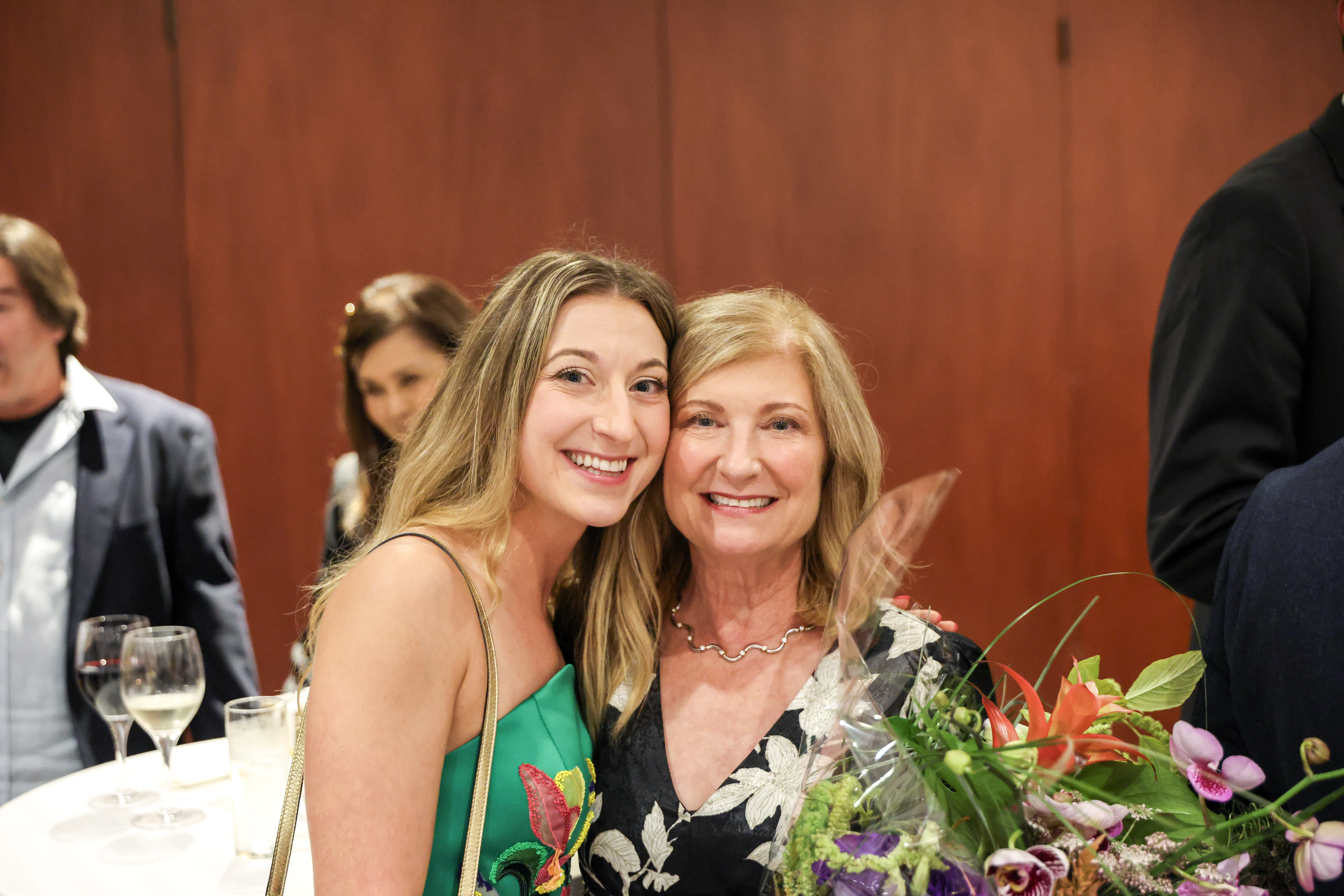
The Department of Surgery gathered at the Royal Sonesta Chase Park Plaza to honor its graduating chief residents during an evening celebrating their achievements and the completion of their surgical training.
Residents, fellows, faculty, staff and family members came together for the graduation ceremony, which began with a cocktail reception followed by the presentation of departmental awards recognizing outstanding faculty members and mentors.
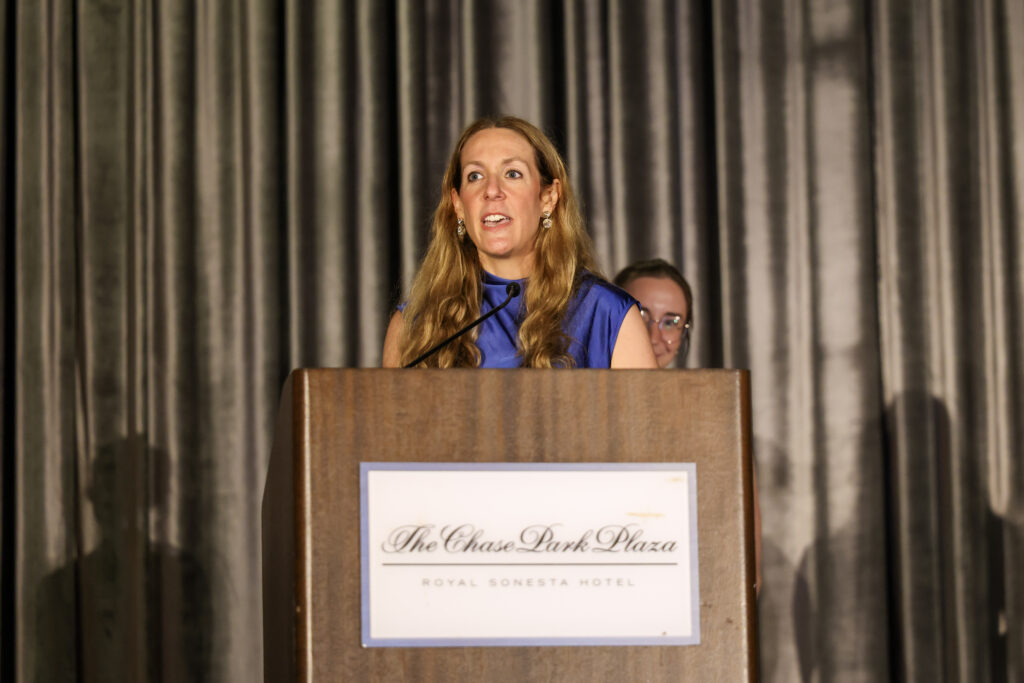
Dr. Yu welcomed attendees and opened the ceremony by congratulating the graduating residents and their families on reaching this significant milestone, recognizing the dedication and support that made this accomplishment possible.
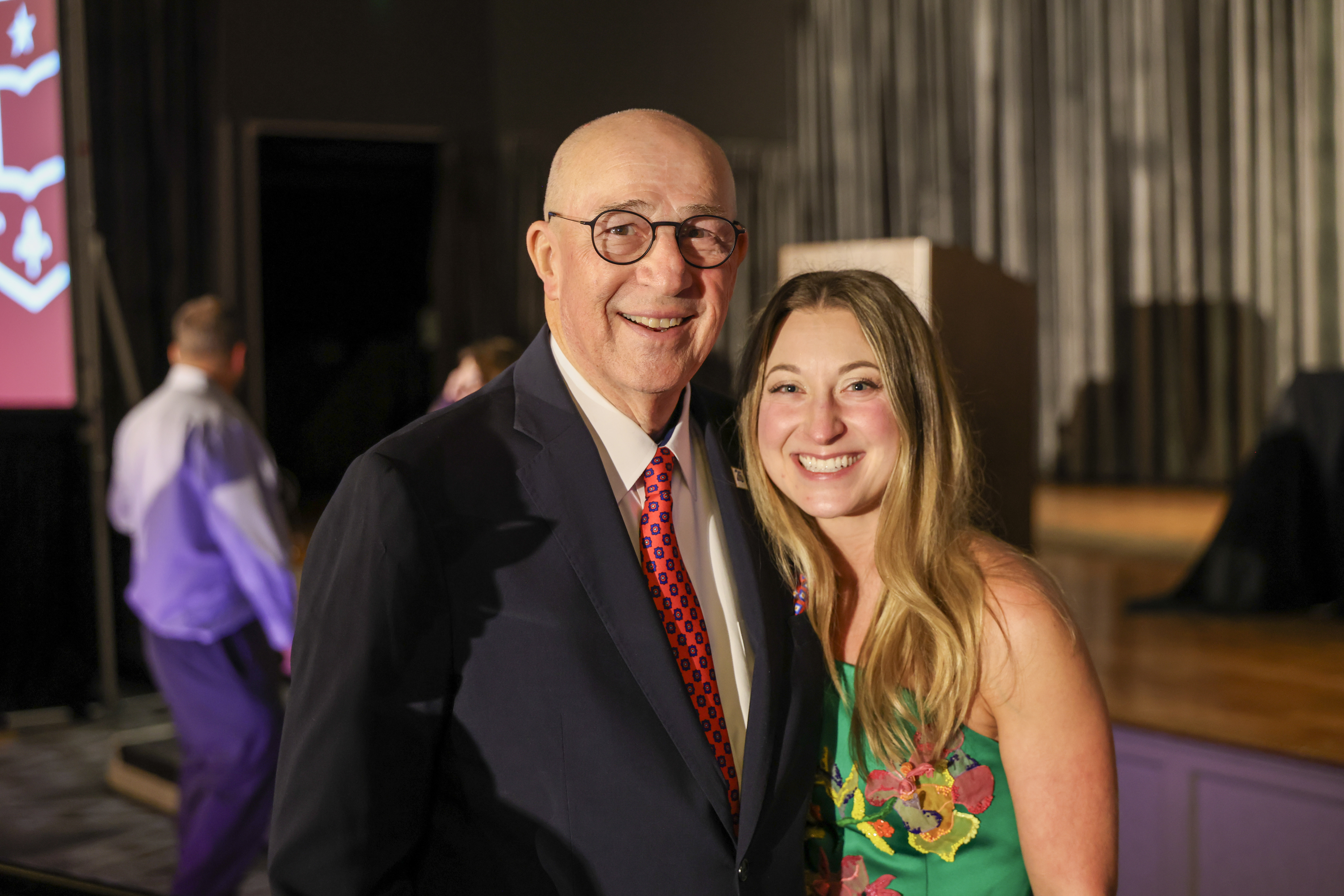
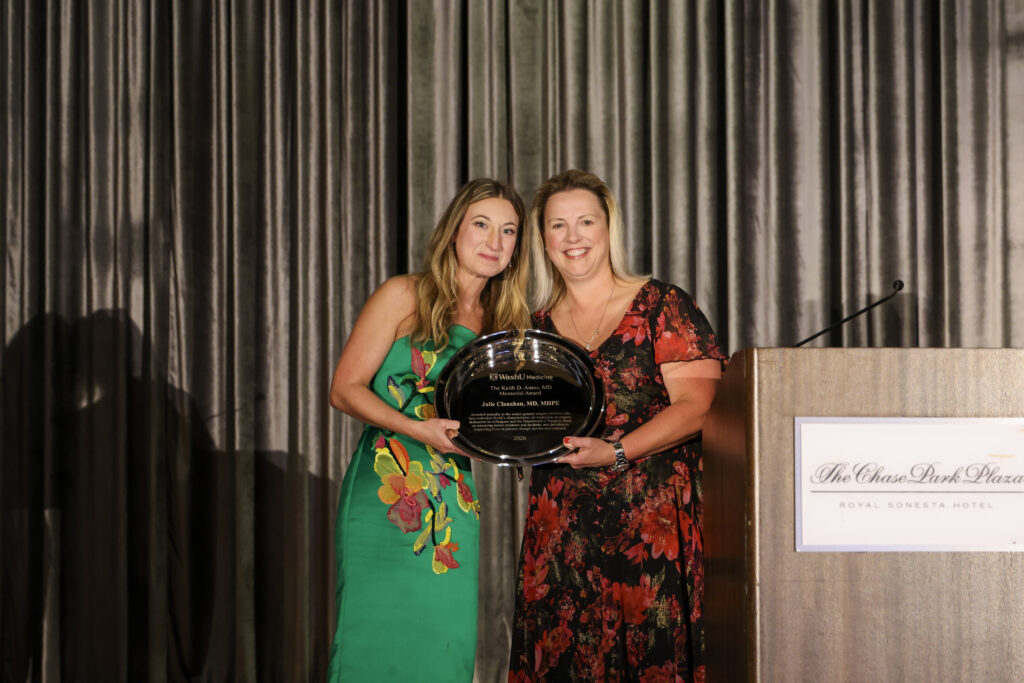
Before residents were recognized, the department presented resident education awards. Julie Margenthaler, MD, presented the Keith D. Amos Award to Dr. Clanahan. The award was created to honor a senior resident who embodies the leadership characteristics and dedication to training junior residents.
Tiffany Brocke, MD, and Shaleen Sathe, MD, the rising administrative chief residents presented the Eugene M. Bricker, MD, Teaching Award to Dr. Shepherd. The award is juried by the general surgery residents and recognizes the chief resident who most exemplifies Bricker’s dedication and passion for teaching.
Brock and Sathe also presented the Evarts A. Graham, MD, Teaching Award Kathryn Rowland, MD, MPHS, associate professor of pediatric surgery and director of the Center for Humanism and Ethics in Surgical Specialties (CHESS).
The graduating administrative chiefs, Cameron Casson and Hannah Phelps presented the Jeffrey F. Moley, MD, Mentorship Award posthumously to Dr. Brad Warner, accepted by Dr. Barbara Warner on his behalf. The award honors a faculty surgeon whose mentorship, leadership, character and surgical judgment serve as an exemplary model by the chief residents.
The graduating administrative chiefs also presented the Kim and Tim Eberlein Humanism Award was presented to Robert MacGregor, MD, assistant professor of minimally invasive surgery. This award is presented to the faculty member who demonstrates a commitment to humanism in surgery through their efforts to improve the lives of residents and the community who they serve.
Barbara Warner presented the inaugural Brad Warner, MD, Excellence in Service Award to Edie Threlkeld, MD. The award is presented to a resident who exemplifies service to patients and a spirit of collaboration.
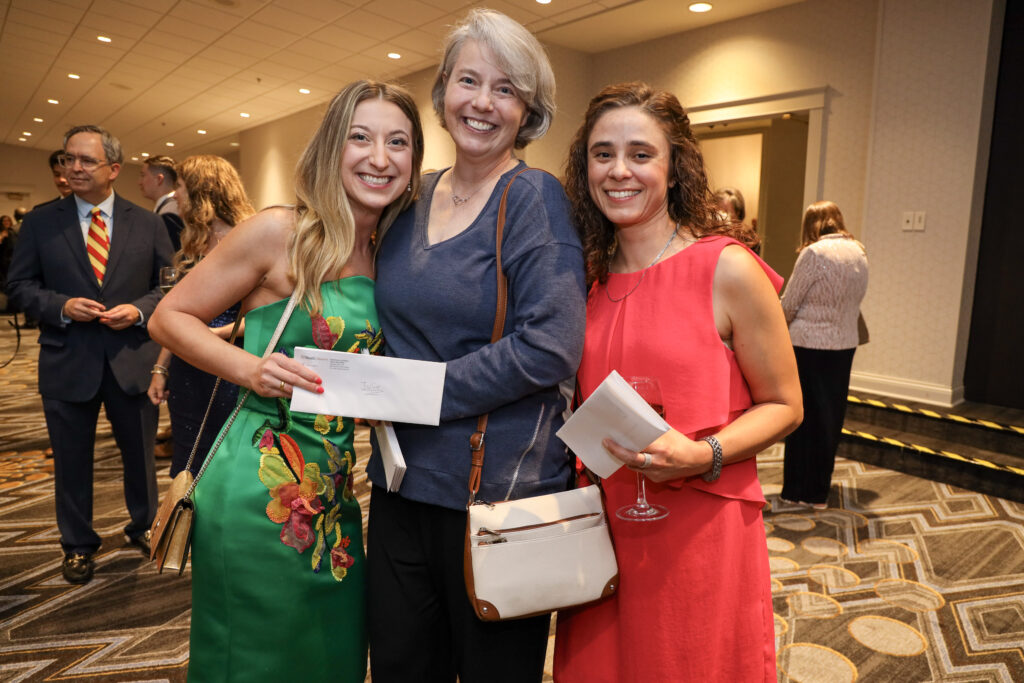
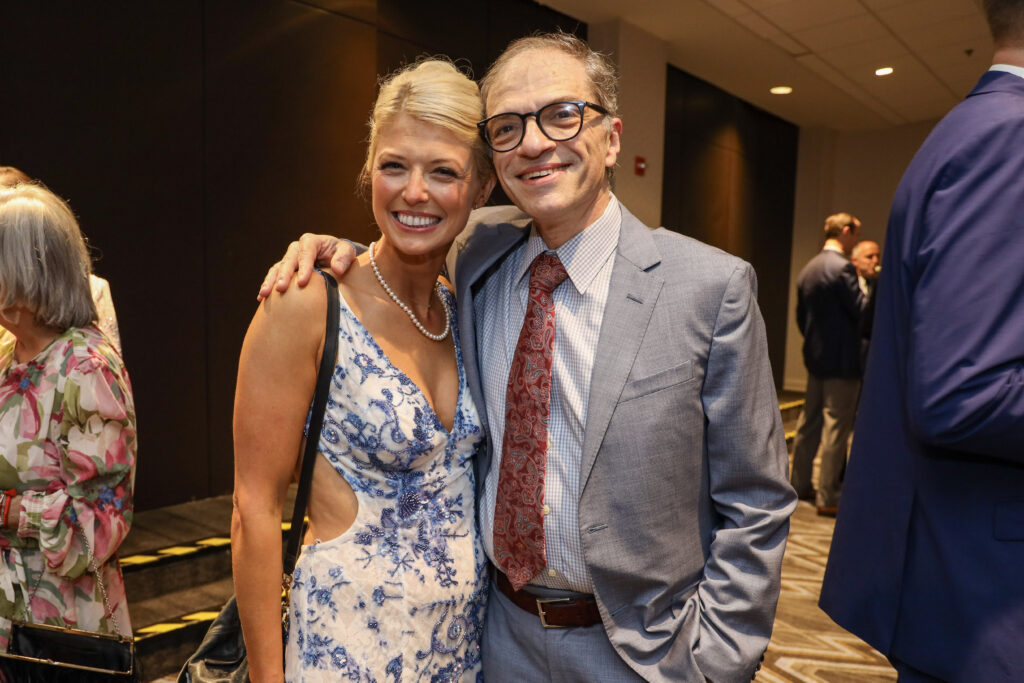
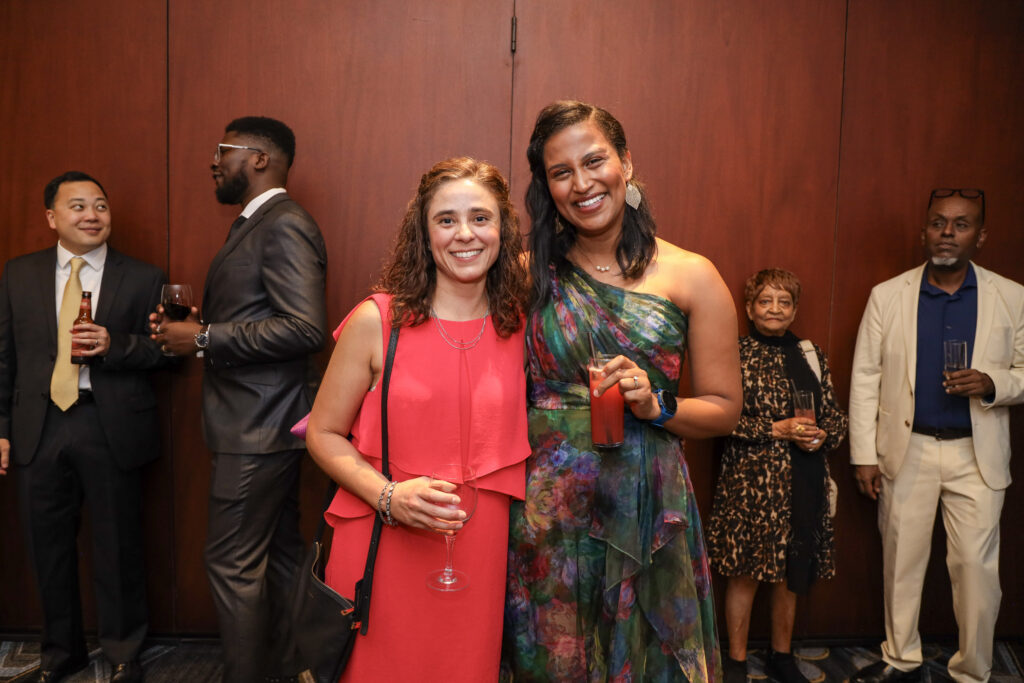
Chief resident recognition
The graduating chief residents were introduced by a faculty mentor who honored their achievements and celebrated their performance, overcoming challenges throughout residency.
Cameron Casson, MD, was introduced by Lindsay M. Kranker, MD
Hannah Phelps, MD, was introduced by Andrew Yeh, MD
Tsehay Abebe, MD, MPHS, was introduced by L. Michael Brunt, MD
Julie M. Clanahan, MD, MHPE, was introduced by J. Westley Ohman, MD, and Kerri Ohman, MD
William Gerull, MD, was introduced by Michael Awad, MD, PhD, MHPE
Merrill Rubens, MD, was introduced by Jennifer Yu, MD, MPHS
Hailey Shepherd, MD, was introduced by Daniel Kreisel, MD, PhD
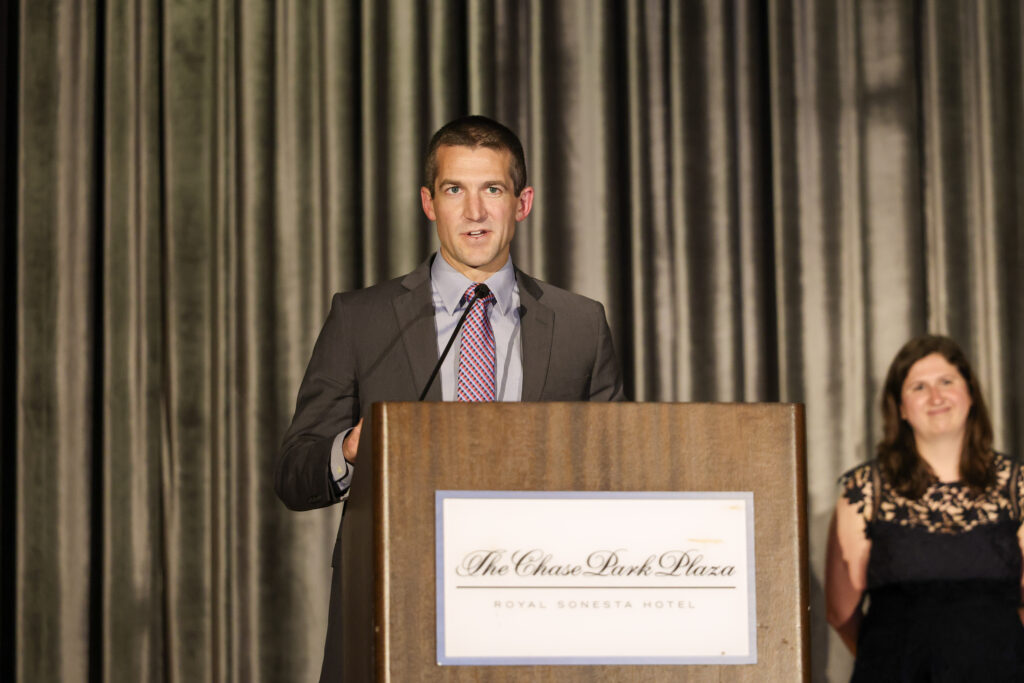
Each resident expressed gratitude to their faculty mentors and provided short reflections on their time in residency at the Department of Surgery. They offered hopeful messages to the residents who will come after them in the education program, offering reassurance that they have the capacity to achieve whatever goals they set for themselves.
After each graduating chief was honored, the administrative chiefs returned to the podium to present gifts to the educators who mentored them along the way. These personal gifts are meant to convey the chiefs’ gratitude and honor the role each mentor played in their path through residency. The administrative chiefs also offered gratitude to the education coordinators who facilitated the residency experience along the way.
Closing remarks
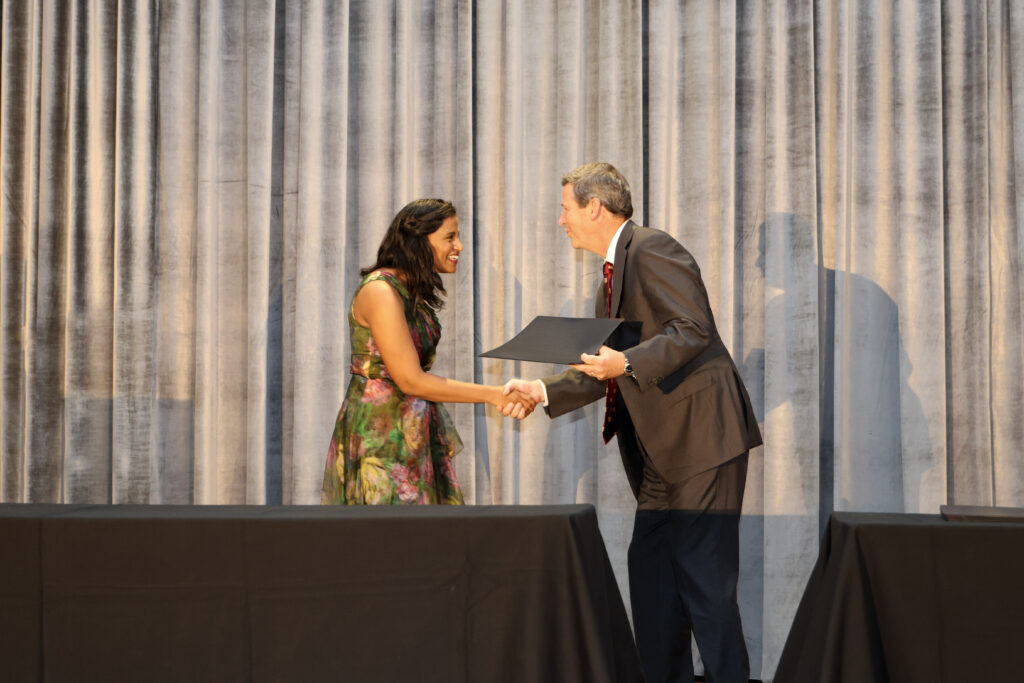
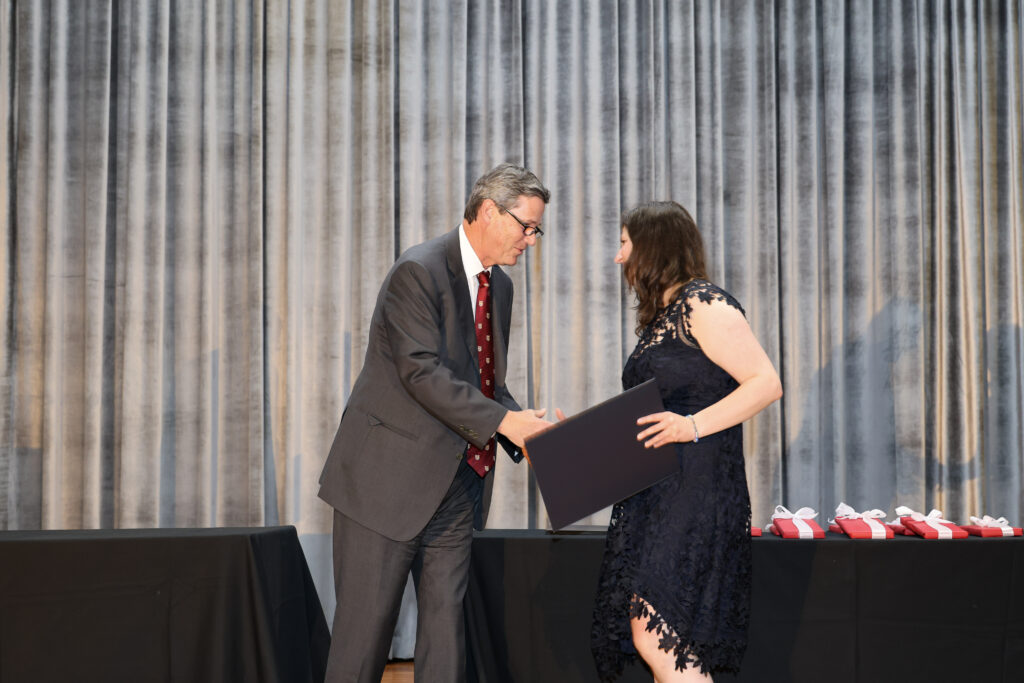
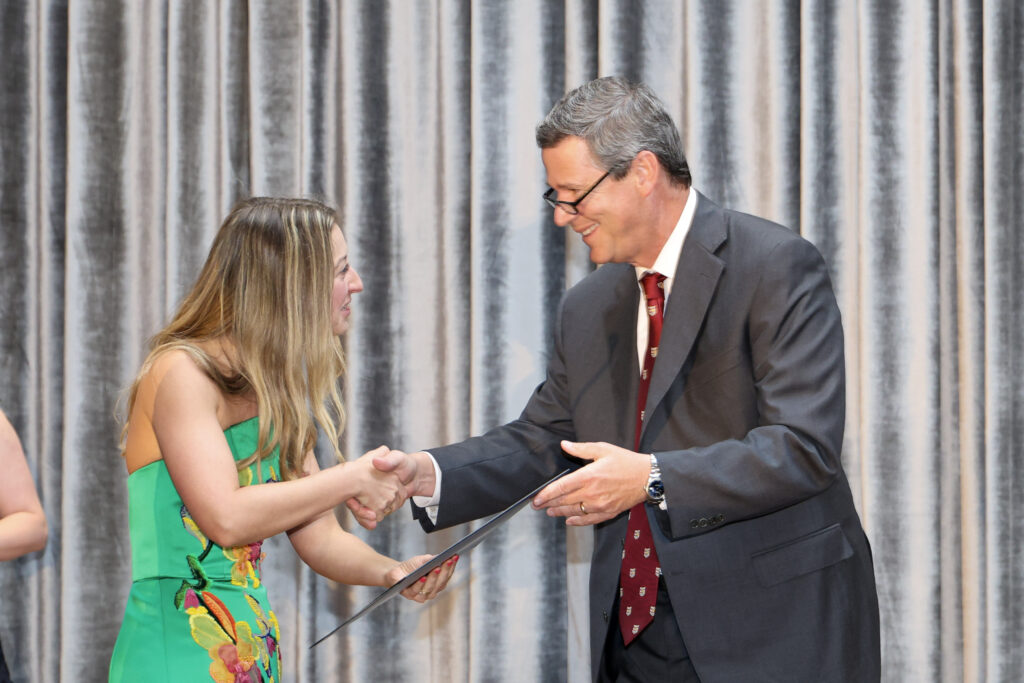
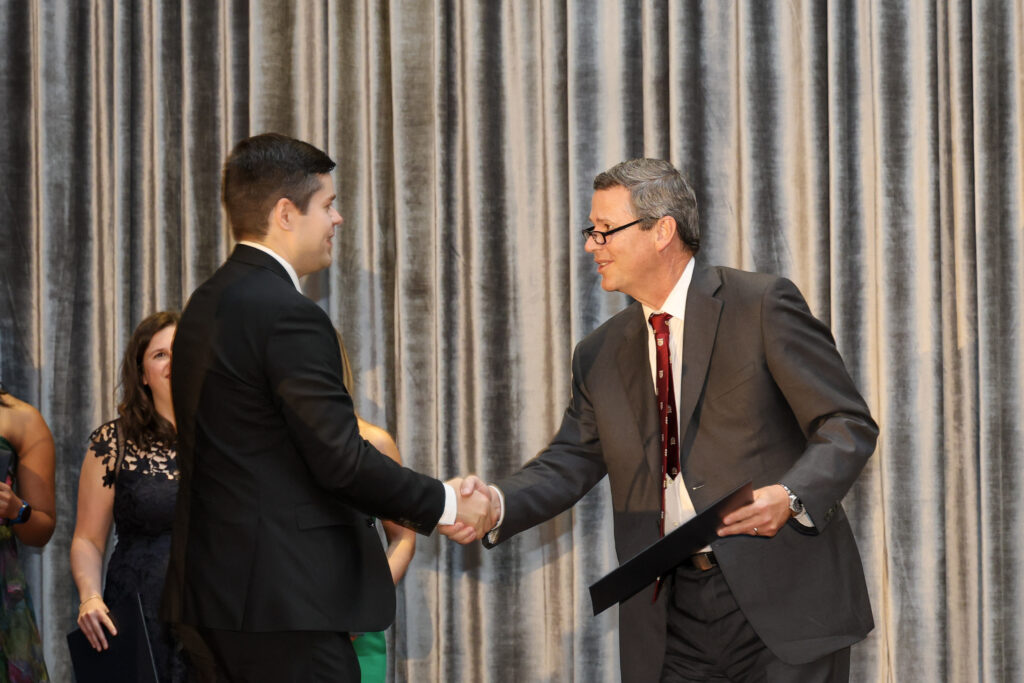
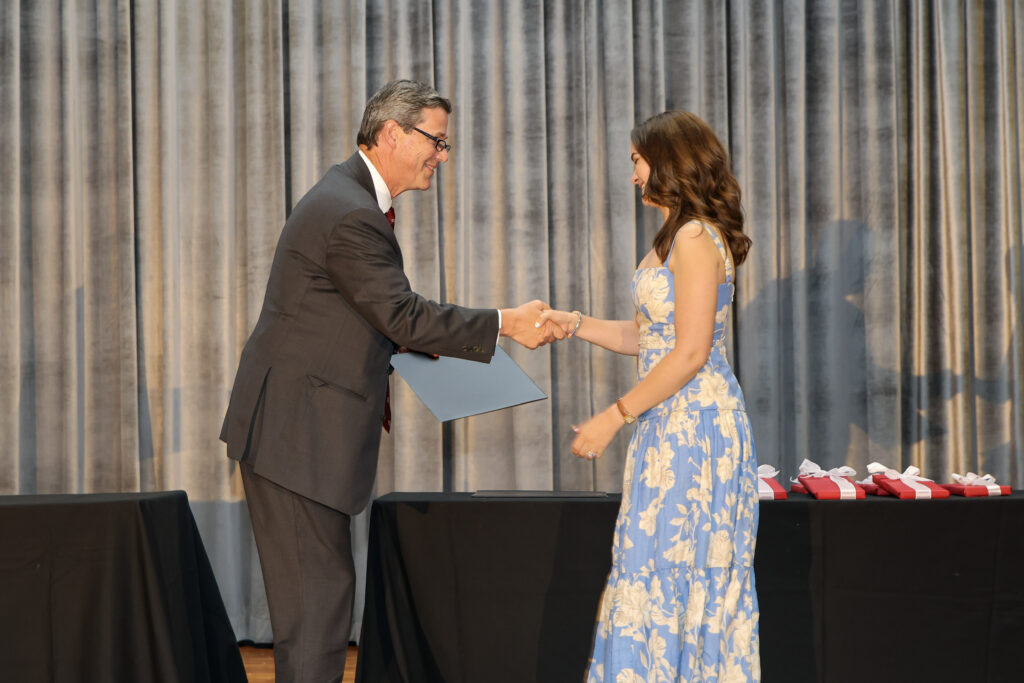
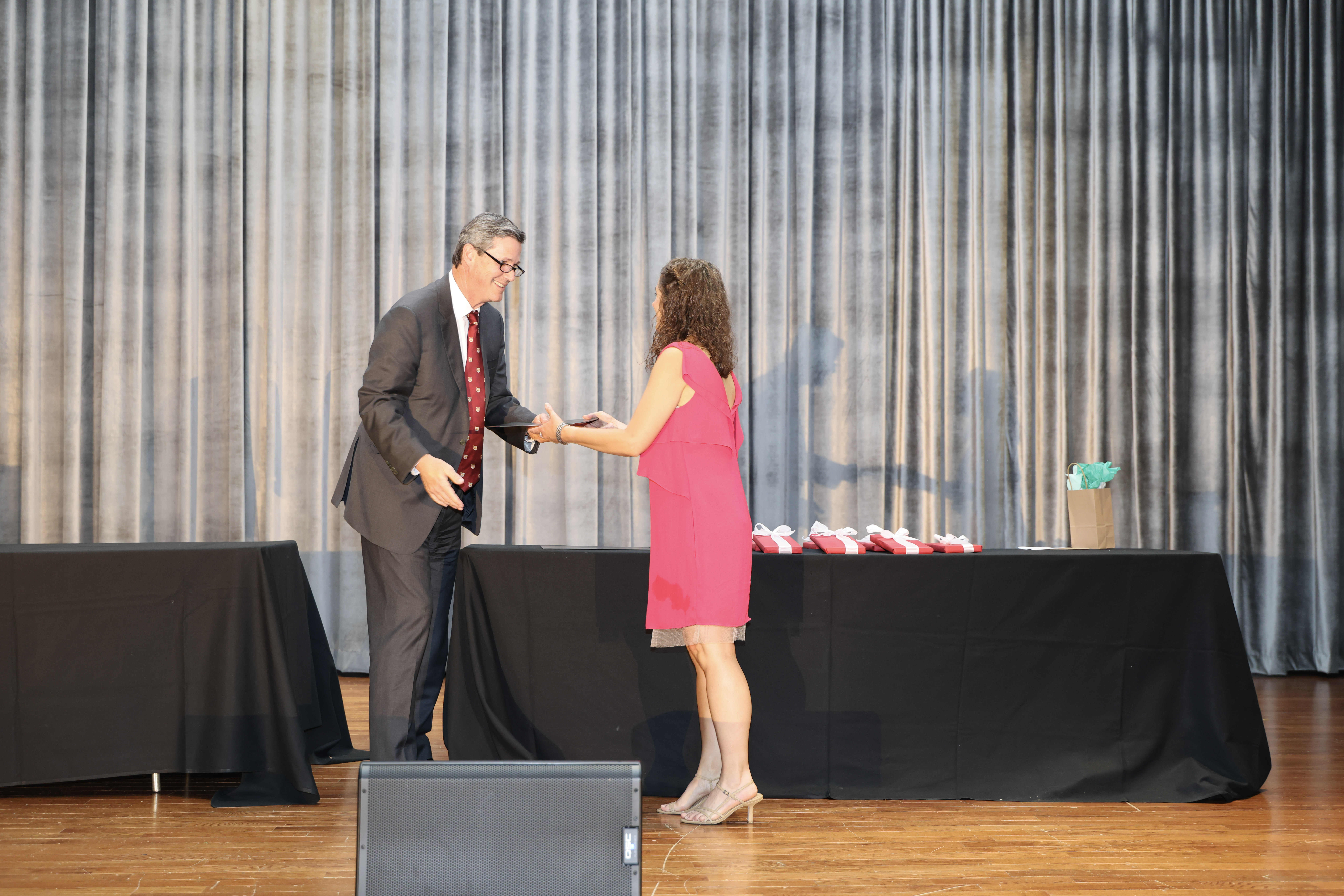
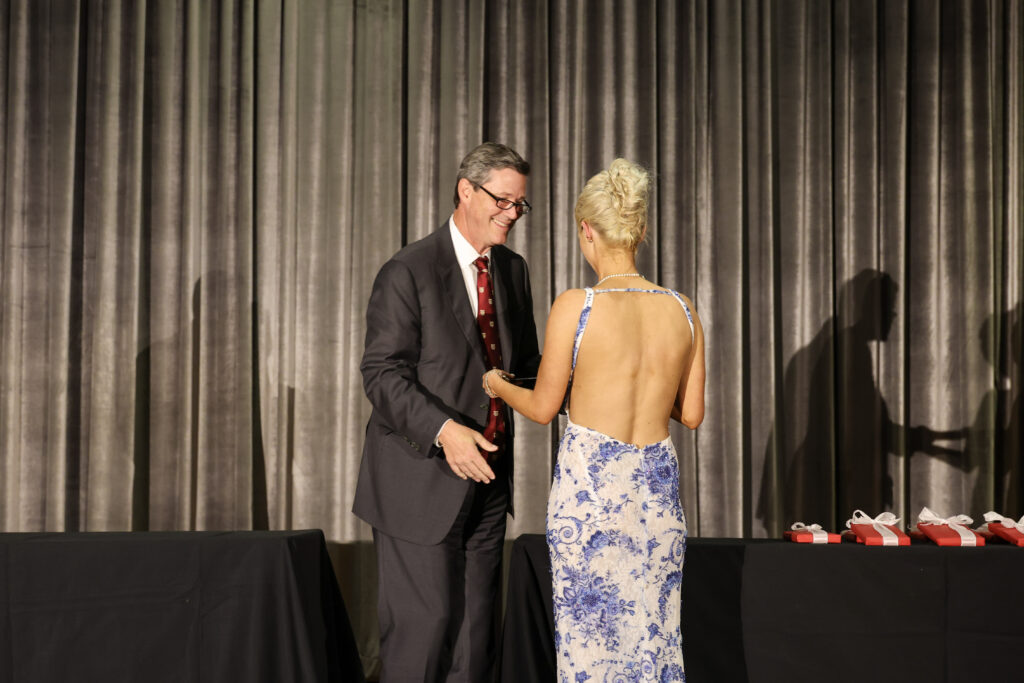
To close the evening, Dr. Yu called the graduating chiefs back to the stage one by one, where John A. Olson, MD, PhD, the chair of the Department of Surgery, who is the William K. Bixby Professor, presented them with their certificates. Dr. Olson’s parting message to the residents assured his confidence in their ability as surgeons.
“Thank you to all the families, friends and rising trainees for joining us to celebrate these amazing surgeons,” said Olson. “To the current trainees: tonight is a celebration of our community and a promise that this faculty, department, and this institution will give its all for you to raise you as we have raised these fine chief residents to become the best that your talent and your effort will enable you to be. Have confidence in the process, seize every opportunity, and appreciate each experience as it comes. To the graduates: Please always remember that the Department of Surgery at Washington University in St. Louis is your birthplace as surgeons. We know that you will go forth and do great things. Remember that we will be here for you and you can always return home.”