Breast cancer is a condition that begins in the breast tissue, most often in women.
Symptoms of breast cancer include a detectable lump in the breast, bloody discharge from the nipple, and changes in shape or texture of the breast.
Treatment depends on the stage of cancer and may consist of chemotherapy, radiation, immunotherapy or surgery.
Regular screening and understanding the genetic component of breast cancer increases the likelihood of catching this condition in its earlier, easier treated stages.
Cancer surgeons at WashU Medicine

Cancer surgeons at WashU Medicine see patients at Siteman Cancer Center, which has received the highest possible rating from the National Cancer Institute.
Breast cancer types and symptoms
What is breast cancer?
Breast tissue develops naturally on the chest as a person experiences puberty. Over time, the amount of breast tissue may fluctuate with weight or hormonal changes, as seen in pregnancy.
Cancer beginning in the breast occurs when abnormal cells begin to grow out of control in the breast tissue, often first detected as an unusual lump in the tissue. The tumors beginning in these organs can spread to lymph nodes, tissues and other organs in the chest as it progresses.

Patient story: Pam Nicholson’s breast cancer journey
Are there different types of breast cancer?
Breast cancer is a highly complex disease, with many different types and subtypes. The type of breast cancer someone is diagnosed with is determined by the specific cells in the breast that become cancer.
Most breast cancers are carcinomas. These are tumors beginning in epithelial cells that line organs and tissues. Carcinomas in the breast are usually a more specific type called adenocarcinoma, which starts in cells in the ducts or the lobules of the breast tissue.
Breast cancer type can also refer to whether the cancer has spread. In situ breast cancer (ductal carcinoma in situ or DCIS) has not grown into the rest of the breast tissue. Invasive or infiltrating breast cancer describes any type of breast cancer that has spread into the surrounding breast tissue.
Examples of specific breast cancers include:
- Ductal carcinoma in situ (DCIS)
- Invasive breast cancer (ILC and IDC, depending on location)
- Triple negative breast cancer
- Inflammatory breast cancer
- Paget disease of the breast
- Angiosarcoma
- Phyllodes tumor

Exceptional cancer care
What are the symptoms of breast cancer?
Breast cancer typically doesn’t cause symptoms in its early stages. Most patients are diagnosed after a screening test such as a mammogram, not because they noticed changes in their bodies. There are a number of signs associated with breast cancer, and it’s good to know what they are.
Common symptoms include:
- A breast lump or thickening that is different from surrounding tissue
- Change in the size, shape or heaviness of one breast
- Bloody or clear yellow discharge from the nipple
- Change in the nipple’s appearance
- Tenderness, pain, or aching in one area of the breast
Other symptoms may point to more invasive types of breast cancer:
- Redness or dimpled skin on the breast that resembles an orange peel
- Change in the color of the breast to red, purple, pink, or a bruised appearance
- Unusual warmth of one breast
- Itching
- A rapid change in the look of one breast, over the course of days or weeks
- Peeling or flaking of the nipple skin
- Flattening or inversion of the nipple
- Enlarged lymph nodes under the arm or above or below the collarbone
Are there complications to breast cancer?
Complications to breast cancer include new or worsening pain and headaches, osteoporosis, lymphedema, lung and heart problems, and fatigue due to the presence of the cancerous tumor. Metastasis occurs when the breast cancer spreads to other regions of the body, causing new symptoms.
Breast cancer stages
Breast cancer symptoms are also dependent on stage of progression. The stages of breast cancer are:
- Stage 0 (carcinoma in situ): Ductal carcinoma in situ (DCIS) is a non-invasive condition in which abnormal cells are found in the lining of a breast duct. The abnormal cells have not spread outside the duct to other tissues in the breast. Paget’s disease of the nipple is a condition in which abnormal cells are found in the nipple only.
- Stage I: Stage I is usually diagnosed when the tumor is smaller than 2 centimeters (about the size of a peanut). Some cancer cells may have spread to the closest lymph nodes to the breast, which are located in the armpits.
- Stage II: Stage II breast cancers are typically those in which the tumor is still smaller in size – between 2 and 5 centimeters – but the cancer has spread to farther lymph nodes, such as those near the breastbone. Some tumors that are larger than 5 centimeters (about the size of a lime) will be diagnosed as stage II if the cancer has not spread to any lymph nodes.
- Stage III: In patients with stage III breast cancer, the tumor is often larger than 5 centimeters (the size of an egg or larger). The cancer may have spread to 4 to 9 lymph nodes in the armpits, to lymph nodes near the breast bone, and to lymph nodes above and below the collarbone. Stage III breast cancer can also spread to the chest wall and/or to the skin of the breast. Cancer that spreads to the skin may be inflammatory breast cancer.
- Stage IV: The cancer has spread to other parts of the body, most often the bones, lungs, liver, or brain. This is also known as metastatic breast cancer.
In inflammatory breast cancer, a subtype of breast cancer, the cancer has spread to the skin of the breast, and the breast looks red and swollen and feels warm. The redness and warmth occur because the cancer cells block the lymph vessels in the skin. The skin of the breast may appear dimpled, like the skin of an orange. There may not be any lumps in the breast that can be felt. Inflammatory breast cancer may be stage IIIB, stage IIIC, or stage IV.
Breast cancer causes, risk factors and prevention
What causes or contributes to the development of breast cancer?
There is no uniting causal factor of breast cancer, but patients who have a family history of breast cancer likely have a hereditary type of this disease.
Having hereditary breast cancer means that there is a genetic mutation that has been passed through the family and inherited.
Are there risk factors for developing breast cancer?
Anything that increases the risk of getting a disease is called a risk factor. Having a risk factor does not mean that someone will get a particular type of cancer; not having risk factors doesn’t mean that someone will not get a particular type of cancer.
The most common risk factors for developing breast cancer include:
- Being born biologically female
- Older age
- Family history
- Being overweight and sedentary
- Poor diet and excessive alcohol use
- Undergoing hormone replacement therapy
- Different factors associated with pregnancy, breastfeeding, and menopause
Your disease risk
Find out your risk of developing breast cancer and get personalized prevention tips from Siteman Cancer Center.
Can breast cancer be prevented? How?
Many of the risk factors for developing breast cancer cannot be avoided.
Having regular screenings if you believe you are higher risk or have a family history of breast cancer can prevent any cancerous cells from advancing to a later stage.
If you have a strong history of breast cancer in your family, your physicians may recommend that you undergo genetic testing to determine whether your cancer was caused by an inherited mutation, such as a mutation in the BRCA gene.
Red flags for possible hereditary cancers include a family history of certain types of cancer, early-age onset of a particular cancer, multiple family members with the same cancer, or multiple types of cancer within the same person.
Genetic counselors at WashU Medicine and Siteman Cancer Center can help you decide if genetic testing is right for you.
Genetic testing could help your doctors make better decisions about your care. Individuals with BRCA mutations, for instance, are more likely to develop cancer at younger ages or to have cancer in both breasts. The results from your test could also benefit family members who may not be aware of their cancer risks.
Breast cancer diagnosis and treatment
How is breast cancer diagnosed?
Breast cancer is often first detected at regular screenings.
Screening means checking a woman’s breast for cancer before there are signs of the disease.
It’s recommended that women who are 40 to 74 years old and at average risk for breast cancer get a mammogram every 2 years.
Depending on risk factors, you might also need magnetic resonance imaging (MRI) in addition to your mammogram.
People with a higher risk of breast cancer, such as those with blood relatives who have a history of breast cancer, might need to begin yearly mammograms and breast exams earlier.
After initial detection, there are multiple options for diagnosis.
Options include:
- Biopsy: A biopsy is a procedure to obtain a tissue sample from the body, in this case the breast tissue. Doctors collect the sample using a needle, or remove it during a minor surgical procedure. The sample is examined under a microscope to check for abnormal cells.
- Imaging: There are many techniques for visualizing potentially cancerous tissue. These include all-digital breast imaging services, including screening and diagnostic mammography, breast ultrasound, and breast MRI.
- Hormone and genetic tests: If a biopsy shows that a patient has cancer, physicians will study the hormones and genes present in the biopsied tissue to learn about the cancer type and what the prognosis of its development and recurrence may be.
What to know about cancer screening guidelines in 2026>>
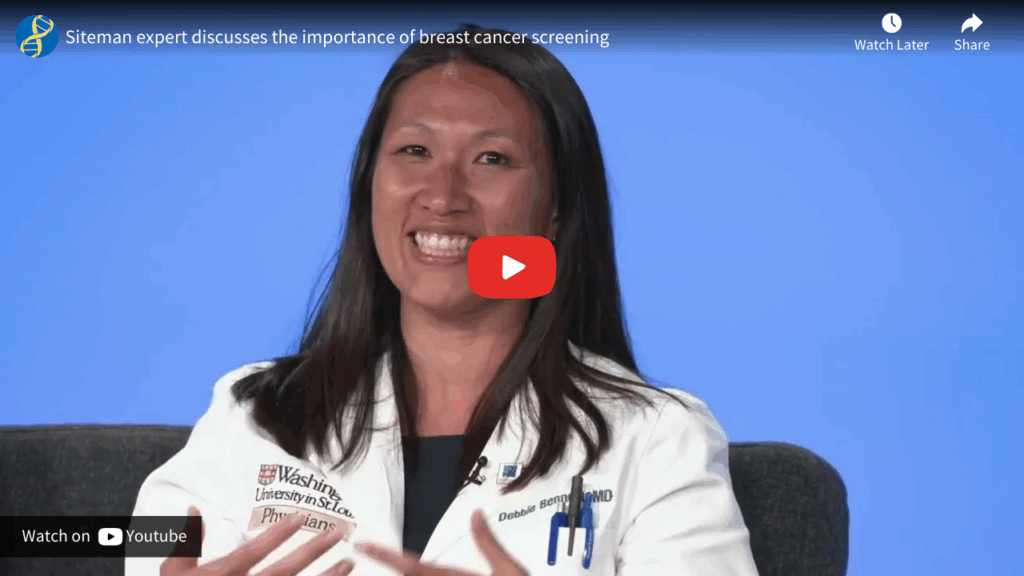
Read more: What to know about mammograms and other screening methods>>
What options are available for breast cancer treatment? Are any more common or successful?
Patients with breast cancer typically receive one or more of the following treatments:
- Surgery: Patients with breast cancer, especially those in the early stages, are often treated with surgery to remove the tumor. If the tumor is large, removing the entire breast may be the best treatment. This procedure is called a mastectomy. Sometimes, patients voluntarily choose to undergo a mastectomy to prevent the cancer from returning. Be sure to discuss your wishes and concerns with your physicians. If the tumor is small, the surgeon can sometimes remove it while leaving much of the breast tissue intact. This procedure is called breast-conserving surgery, or a lumpectomy. When a patient has elected to have a breast reconstruction following surgery for breast cancer, surgeons at Siteman will use innovative techniques to remove the cancer safely while preparing the breast for a successful reconstruction or other cosmetic procedure.
- Systemic therapy: Chemotherapy, hormone therapy, and molecularly-targeted therapy are the main systemic therapies for breast cancer. They are medicines and can be delivered through IV infusions, pills, or injections. You may receive one of these therapies or several in combination, depending on the type and stage of your cancer.
- Radiation therapy: Radiation therapy is a method of killing cancer cells using high-energy X-ray beams. The radiation can come from a source outside the body, or can be placed inside the body temporarily for a high and precise dose. Most breast cancer patients will undergo radiation therapy over the course of their treatments.
- Immunotherapy: Immunotherapy is a treatment that trains the patient’s immune system to fight cancer. Siteman researchers are now participating in clinical trials to test this form of therapy. The immunotherapies available at Siteman include immune checkpoint inhibitors, vaccines, monoclonal antibodies, and biologic therapy.
What is the prognosis for breast cancer? Is there a cure?
The prognosis and treatment options depend on the following:
- The stage of the cancer (whether it affects part of the breast, involves the whole breast, or has spread to other places in the body)
- Whether the tumor can be completely removed by surgery
- The patient’s general health
One in 8 women will be diagnosed with breast cancer. About 1 in 3 cases of breast cancer will become metastatic (meaning the cancer has spread to other places in the body).
For those who get treatment early, with localized or regional breast cancer, 5-year survival rates are 99-86%. Those with metastatic cancer have a lower survival rate, at 29%, according to the American Cancer Society.
People currently diagnosed with breast cancer may have a better outlook as treatments improve over time.
