Advancing research and innovation in surgical care
The Division of Surgical Sciences at WashU Medicine is the home of basic and translational discovery within the Department of Surgery.
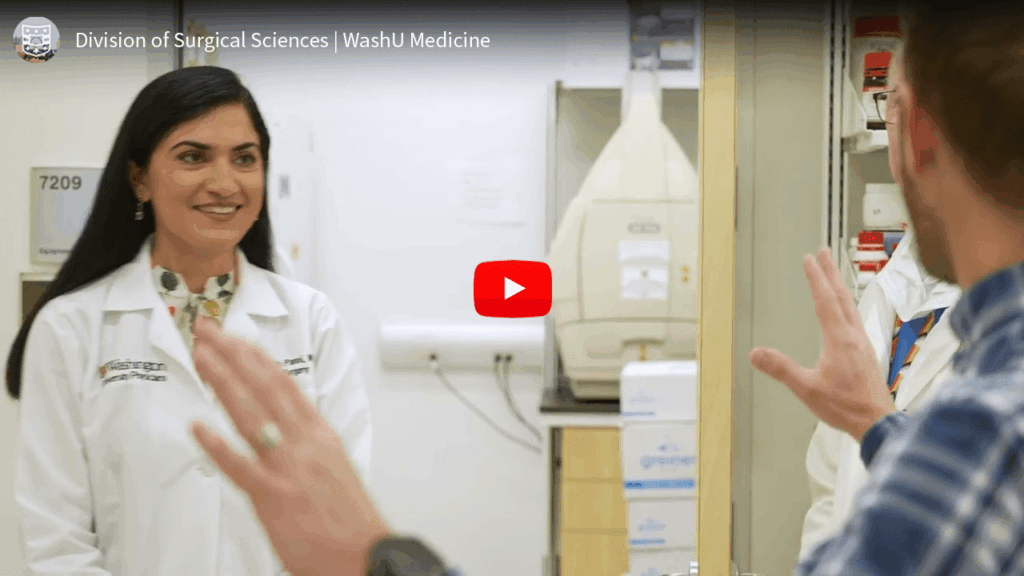
Watch: Groundbreaking research>>
The Division of Surgical Sciences focuses on five key areas:
- Surgical technology and bioengineering
- Transplant immunology research
- Surgical therapeutics
- Regenerative science
- Multi-omics and molecular science
By promoting multidisciplinary collaboration and cutting-edge research, the division aims to develop advanced diagnostics, therapies, and technologies, ultimately improving patient outcomes and training the next generation of innovative surgeons.

Collaboration

Innovation

Mentorship
Division director
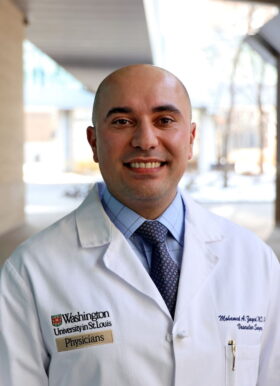
Mohamed A. Zayed, MD, PhD, MBA
Director, Division of Surgical Sciences
Professor of Surgery, Radiology, Molecular Cell Biology and Biomedical Engineering
Division of Vascular Surgery
Director, Vascular Surgery Research
Director, CVISE Center
- Phone: 314-273-7373
Our mission
Although surgeons constitute a relatively small percentage of health care providers, they have an outsized effect on health outcomes.
Globally, about 30% of all health conditions require surgery or management by a surgeon. For patients with life-threatening conditions such as cancer or traumatic injuries, surgery may be the only available treatment option. Surgeons offer vital insights into how a wide range of conditions present in the clinic and opportunities for improving surgical patient care.
For millions of patients around the globe, the expertise and ingenuity of surgeons represent an underutilized source of innovation and hope. The work of surgical scientists — researchers holding either an MD/PhD or a PhD and specializing in the study of any disease managed by surgeons — leads to novel ideas for new surgical procedures, new kinds of surgical devices, new diagnostic tools, and new therapeutics. And surgeons’ work with patients in the clinic fosters new paths of inquiry the researchers then pursue in the lab.
A global leader in biomedical research, WashU Medicine tackles some of the most intractable health problems facing our world today. Here, patient care, education, and research are inextricably linked. Strong investment in education and research leads to improvements in clinical care, patient outcomes, and community health. In turn, our physicians and scientists identify important avenues of study and bring innovations to clinical trials. Ultimately, this cycle leads to people around the world leading longer, healthier lives.
The Department of Surgery at WashU Medicine fully embodies this noble mission. Since the department’s founding in 1914, our surgeon-scientists have made major contributions to the practice of surgery and the treatment of surgery-related diseases, including:
- Performing the first successful surgical removal of a lung
- Developing the first surgical procedure to prevent cancer based on genetic test results
- Creating a groundbreaking nerve transfer technique that restores hand function in patients with cervical spinal cord injury
In recognition of this long history of innovation, in 2024, the department established the Division of Surgical Sciences. Mohamed Zayed, MD, PhD, a vascular surgeon whose breakthrough discoveries have led to the creation of several biomedical startup companies, leads the new division.
Our sections
The Division of Surgical Sciences builds on WashU Medicine’s legacy of excellence and innovation in surgery to advance team science and cultivate the next generation of surgical science leaders. The division comprises five sections encompassing the breadth of surgical research conducted in the department:
- Section for Regenerative Medicine: Investigates novel biomaterials, scaffolds, and growth factors to promote tissue regeneration and organ repair and explores regenerative solutions critical to surgical patient care, such as wound healing, organ transplantation, and reconstructive surgery.
- Section for Transplant & Immunology Research: Explores the mechanisms underlying transplant rejection and tolerance and develops personalized strategies for decreasing transplant rejection and improving long-term graft survival and function.
- Section for Surgical Therapeutics: Uses state-of-the-art technology to study the intricate molecular and biochemical mechanisms influencing the evolution of cancer, foregut disorders, and colorectal conditions.
- Section for Multi-omics & Molecular Science: Employs genomic, transcriptomic, proteomic, metabolomic, and epigenomic analyses to understand the molecular landscape underlying surgical diseases and therapeutic responses.
- Section for Surgical Technology & Bioengineering: Develops new devices to address critical gaps in surgical patient care and works to bring them to market.
Over the past five years, the department has nearly quadrupled its volume of invention disclosures and patent applications. We intend to build on this momentum, advancing new discoveries out of the lab and into the marketplace where they can do the most good for patients around the globe.
Our faculty
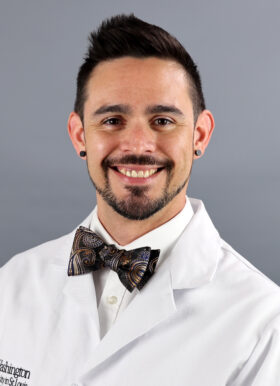
David M. Alvarado, PhD
Assistant Professor of Surgery
Division of Pediatric Surgery
- Phone: 314-454-6022
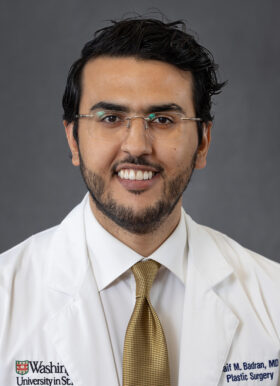
Saif M. Badran, MD, PhD
Assistant Professor of Surgery
Division of Plastic and Reconstructive Surgery
- Phone: 314-362-7388
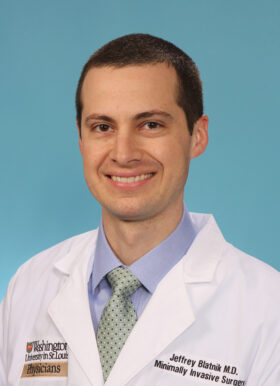
Jeffrey A. Blatnik, MD
Chief, Section of Minimally Invasive Surgery
Associate Professor of Surgery
Division of General Surgery
Director, WashU Medicine Hernia Surgery Center
Director, Institute for Minimally Invasive Surgery
- Phone: 314-454-8877