Hepatitis can cause damage to the liver and, in some cases, a need for a liver transplant.
A Look Into Hepatitis and Liver Transplant
Hepatitis can cause damage to the liver and, in some cases, a need for a liver transplant.

Sarcomas are a cancerous condition that manifests in different types of tissue. Symptoms include progressively enlarged or painful lumps that are superficial, deep or in the joints. There are many options for diagnosing sarcomas, and their progress or stage determines treatment options. Sarcoma is a rare type of cancer that often doesn’t cause symptoms, which makes screenings vitally important if you develop any new and unidentified lumps.

Cessation treatment can aid such dual nicotine users.

Department of Surgery faculty and staff participate in training for residency and fellowship leaders.

Historic Division of Plastic and Reconstructive Surgery to host 70th Annual Meeting.

Making the decision to undergo weight loss surgery, or bariatric surgery, can be difficult. They may have questions about their life after their procedure, wonder what sort of diet restrictions they will have, and question who will be there to support them before and after surgery. Washington University bariatric surgeons are partners in their patient’s […]
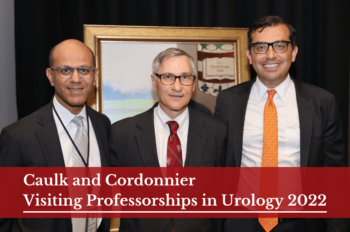
John R. Caulk Visiting Professor Gerald Andriole, MD, and Justin J. Cordonnier Visiting Professor Mohammad Allaf, MD, visit the Division of Urology.

The Department of Surgery welcomes new Chair, John Olson, MD, and the Divisions of Cardiothoracic Surgery, Public Health Sciences and Urologic Surgery welcome new faculty.
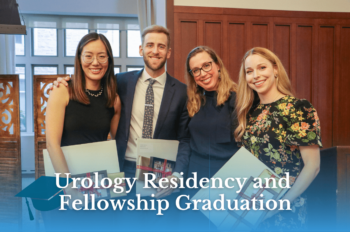
Congratulations to graduating urology residents and fellows from the class of 2022.
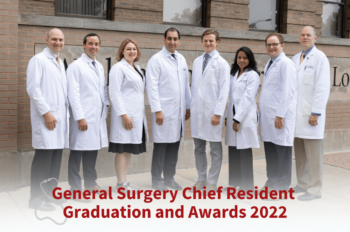
Congratulations to our 2022 graduates, who will go on to become leaders in surgery.
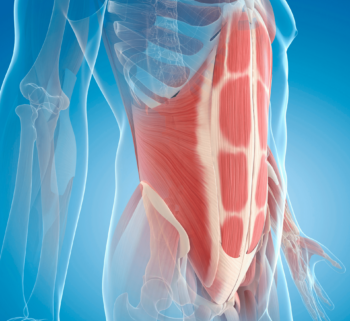
A hernia belt can provide temporary relief, but surgery is the only way to fix a hernia.
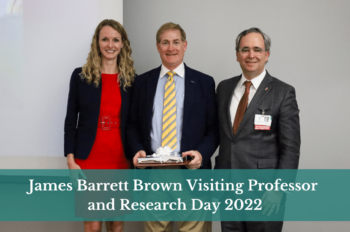
Visiting professor and research presentations honor legacy of plastic surgery chair.
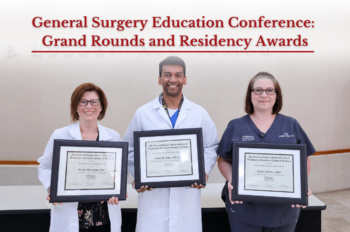
Eberlein delivers a reflection on the future of surgery and residents present annual awards.

Washington University patients benefit from blood donations during surgery and in critical care situations. Learn about the “what, how, and why” of blood donation.

Kimberly Berni, MD, and Jeffrey Glaser, MD, join Washington University Urology at Progress West Hospital and Barnes-Jewish St. Peters Hospital.

Washington University surgeons highlight the importance of speaking openly about men’s health with your doctors and learning about screening guidelines.

Dr. Blatnik fixed the complex hernias that caused Vojin pain for years.
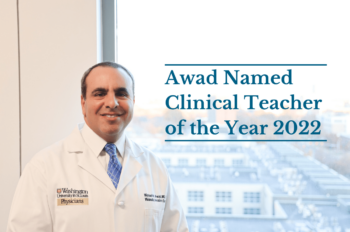
Graduating medical students recognize Michael Awad, MD, PhD, for his commitment to education.
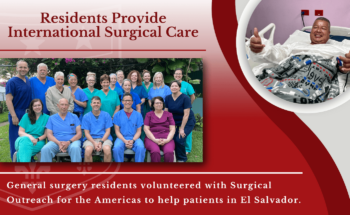
General surgery residents volunteered with Surgical Outreach for the Americas to help patients in El Salvador.

Starting your weight loss surgery journey with Washington University bariatric surgeons is as simple as 1-2-3.

Four finalists presented research at 2022 Samuel A. Wells, Jr., Research Day Competition and two winners were selected by faculty vote

Barnes-Jewish Hospital is once again recognized nationally for excellence in mitral valve repair by the Mitral Foundation and the American Heart Association.
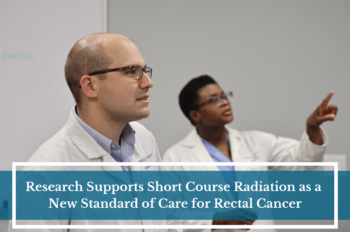
Research conducted by investigators at Washington University School of Medicine has demonstrated the improvement of rectal cancer treatment through short course radiation therapy. This regimen may represent a new standard for treatment in eliminating localized rectal cancer.

Weight loss surgery is part of a lifelong journey. Learn more about life after surgery.

Audrey was born with a rare combination of heart conditions. Thanks to an organ donor and the St. Louis Children’s and Washington University Heart Center team, she celebrated her first birthday at home with a new heart.
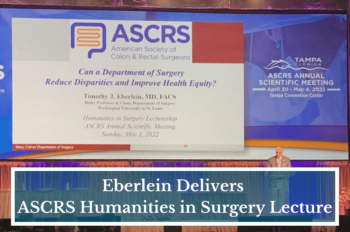
Timothy Eberlein, MD, shares how the Department of Surgery has led in reducing health care disparities and improving health equity.

Follow these steps to get ready for your scheduled surgery.
Several Washington University cardiothoracic surgery faculty members and trainees trekked to Boston to attend the American Association for Thoracic Surgery’s 102nd Annual Meeting.

Washington University urologic surgery faculty members and trainees travelled to New Orleans, LA, to attend the 2022 American Urological Association (AUA) Annual Meeting.

Washington University bariatric surgeons use measures like body mass index (BMI) to determine whether their patients are eligible for weight loss surgery.

Washington University welcomes Horacio Asbun, MD, for the 19th Annual Eugene M. Bricker Visiting Lecture in Surgery.
Prostate cancer is among the most common types of cancer. Learn more about the connection between prostate cancer and erectile dysfunction.
Both high blood pressure and erectile dysfunction are common among older men. Understanding the relationship between these conditions could help men find the treatment that’s right for them.

Breast cancer screening is necessary to detect this condition early enough to have an effective treatment program. Research by investigators at Washington University indicate that patients who hear conflicting information about screening are still interested in attending screening.
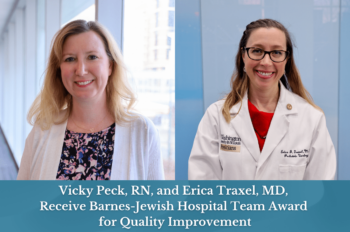
Vicky Peck, RN, Patient Safety and Quality Coordinator, and Erica Traxel, MD, Associate Professor of Surgery, helped create a culture of safety in the Division of Urologic Surgery by developing a program to track ureteral stents.
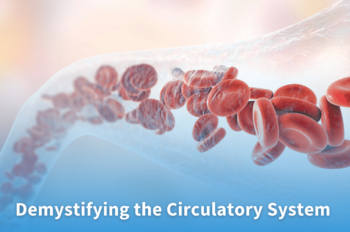
The Department of Surgery explains terminology and components of the circulatory system. We use plain language to explain to describe what arteries, vessels, and related structures are, how they are different and some common conditions that affect them.
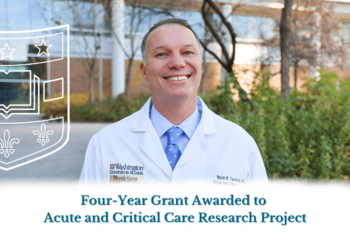
Dr. Isaiah Turnbull, a researcher and surgeon at Washington University School of Medicine St. Louis, has received a four-year $1.5 million grant for his research on immunosuppression induced by burn injuries. This work is in partnership with the Military Burn Research Program.
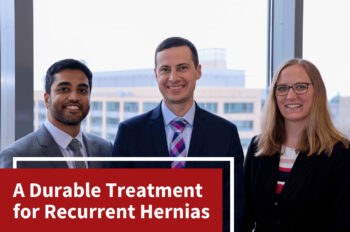
Research by Washington University hernia surgeons finds a durable solution for treating complex recurrent ventral hernias. The findings are published in the journal Surgery.
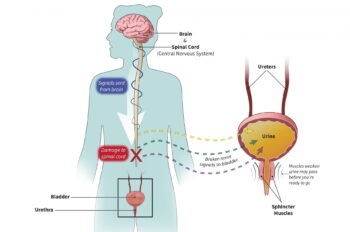
Neurogenic bladder is a condition in which the nerves signaling to the bladder have been damaged, resulting in dysfunction of the bladder muscles and function. Common causes include genetic nerve problems, birth defects, injury, stroke, diabetes, infection, brain or spinal cord tumors. Treatments include lifestyle changes, medicinal treatments and surgery.
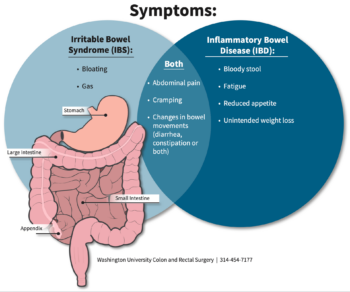
Inflammatory bowel disease and irritable bowel syndrome are two different gastrointestinal conditions. Learn more about each, and how Washington University Colon & Rectal Surgery provides team-based care for inflammatory bowel disease.
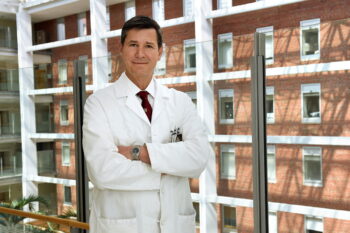
Recognized for expertise in endocrine tumor development.
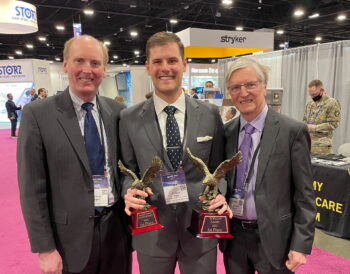
General surgery resident Corbin Frye, MD, won the SAGES Top Gun competition for the second year in a row. Frye and his fellow residents hone laparoscopic skills at the Washington University Institute for Surgical Education.
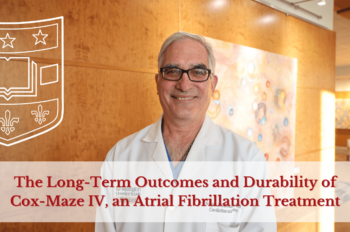
Washington University School of Medicine cardiac surgeons review the long-term outcomes and durability of the Cox-Maze IV procedure to treat atrial fibrillation. This research demonstrates the effectiveness of this procedure in patients with life-threatening heart arrhythmia.
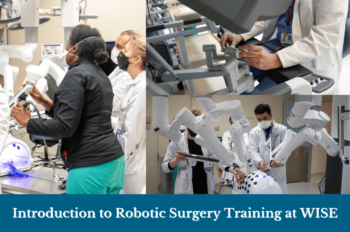
General surgery residents at the Washington University Institute for Surgical Education get hands-on experience with the latest innovations in surgical technology during an introduction to robotic surgery training course.
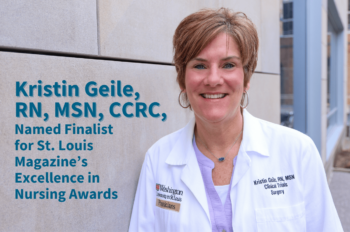
The Department of Surgery’s Kristin Geile, RN, MSN, CCRC, was recently named a finalist for St. Louis Magazine’s 2022 Excellence in Nursing Awards.
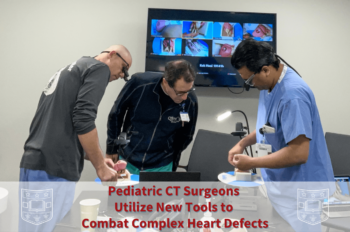
Washington University pediatric cardiothoracic surgeons and fellows tackle rare heart defects in virtual simulation program.
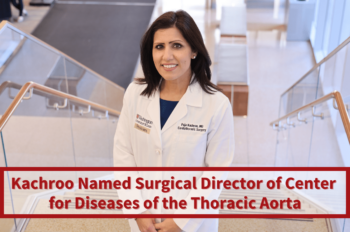
Puja Kachroo, MD, has been named surgical director of the Center for Diseases of the Thoracic Aorta at Washington University School of Medicine and Barnes-Jewish Hospital. Kachroo is a leading expert in aortic disease and cardiac surgery.
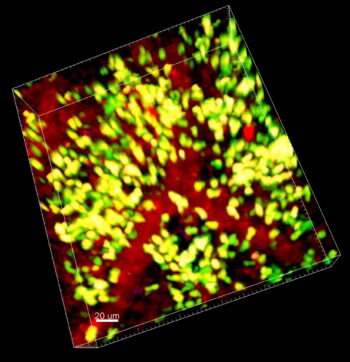
Investigators from the Thoracic Immunology Laboratory have identified pathways leading to ischemia-reperfusion injury after lung transplantation. Their findings are published in the journal PNAS.
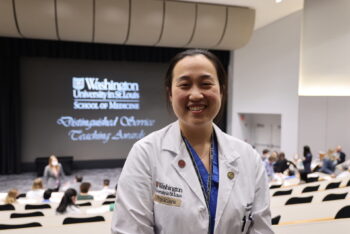
At the 2020-2021 Distinguished Service Teaching Awards, three members of the department were recognized for their contributions to medical student education.

Lymphedema is swelling caused by a blockage or damage to the lymphatic system. Most cases of lymphedema in the United States happen after cancer or cancer treatment. Understanding this condition can help with lymphedema prevention, management and treatment.