Collaboration among WashU Medicine researchers to address challenges in tumor metabolism.
Targeting tumor metabolism to fight cancer (Links to an external site)

Washington University surgeons are part of a multidisciplinary team delivering expert care and leading innovative research at Siteman Cancer Center.
Collaboration among WashU Medicine researchers to address challenges in tumor metabolism.
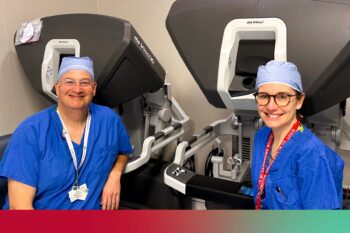
New minimally invasive approach now available at Barnes-Jewish Hospital.
Bladder cancer is among the most frequently diagnosed cancers in the United States.
Skin cancer is common, but you are not powerless against it.
Detect skin cancer early to ensure effective treatment.
Learn to recognize symptoms and when to seek medical attention.
While it can occur at any age, testicular cancer is highly curable—especially when it is found early.
Insight from study in mice could guide next-generation cancer vaccine development
Paul Wise, MD, answers frequently asked questions about colorectal cancer.
Cancer is one of the leading causes of death worldwide, but there are steps you can take to prevent it or reduce your risk.
While any amount of smoking increases your risk of cancer, length of smoking history is linked to higher risk of certain cancers.
When Pam Nicholson was diagnosed with breast cancer in 2020, she sought exceptional care and guidance from Siteman Cancer Center.
Small but mighty, the thyroid plays a crucial role in maintaining our overall health.
Choosing foods with certain key nutrients can help you maintain optimal thyroid health.
Screening tests can help detect cancer early, when it’s most treatable. Learn more about current guidelines.
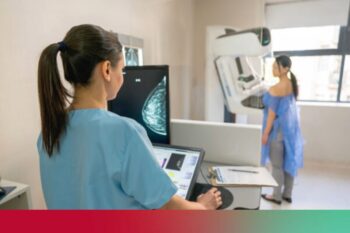
Mammograms are the gold standard for breast cancer screening, but how do other methods compare?
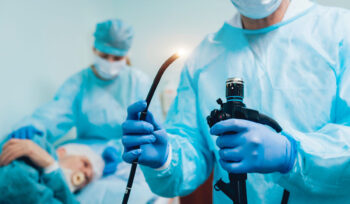
A colonoscopy is one of the most effective tools we have for detecting and preventing colorectal cancer.
Understanding signs of colorectal cancer can help with early detection and treatment.
A new study validates an innovative method of analyzing mammograms to predict risk of developing breast cancer over five years.
Researchers from the Department of Surgery at Washington University School of Medicine looked for clues about why some types of cancer are on the rise in younger adults. They’ve found an interesting lead: a connection to accelerated biological aging.
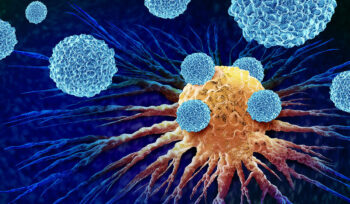
Tumor-infiltrating lymphocyte therapy has received approval from FDA for some patients with metastatic melanoma.
David DeNardo, PhD, alongside his research team in the Tumor Immunology Program at Washington University School of Medicine, is working to understand why responses to cancer immunotherapy vary among patients.
Repeated mammograms contain data on changes in breast density over time that could help identify women at high risk of breast cancer and even reveal which breast is likely to be affected, according to a study by researchers at Washington University School of Medicine in St. Louis.
Researchers at Washington University School of Medicine in St. Louis have identified four important signs and symptoms that signal an elevated risk of early-onset colorectal cancer. The incidence of colorectal cancer is rising in people under 50, making it important to recognize such signs.
Learn more about prostate cancer types, symptoms and treatment from Washington University surgeons at Siteman Cancer Center.
AAES Foundation award recognizes Brown’s investigations in new therapies for aggressive thyroid cancer.
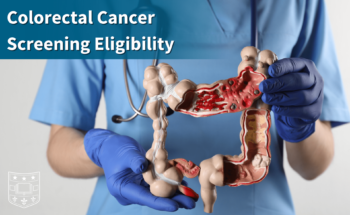
Learn more about the up-to-date screening guidelines and tests for eligible patients at risk of colorectal cancer.
Surgeons use virtual reality headsets for intraoperative planning of DIEP flap breast reconstruction.
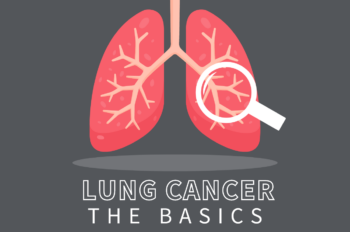
Learn more about lung cancer types, symptoms and treatment from Washington University surgeons at Siteman Cancer Center.
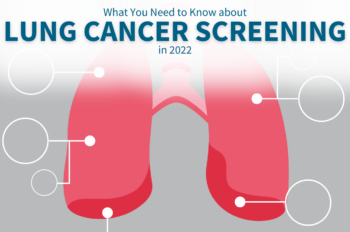
Screening guidelines updated in 2021 nearly double the number of eligible individuals.
Sarcomas are a cancerous condition that manifests in different types of tissue. Symptoms include progressively enlarged or painful lumps that are superficial, deep or in the joints. There are many options for diagnosing sarcomas, and their progress or stage determines treatment options. Sarcoma is a rare type of cancer that often doesn’t cause symptoms, which makes screenings vitally important if you develop any new and unidentified lumps.
Prostate cancer is among the most common types of cancer. Learn more about the connection between prostate cancer and erectile dysfunction.
Learn about the benefits of HIPEC surgery for people in St. Louis with abdominal cancer.
Cancer staging is an essential step in the cancer treatment process. When a patient is diagnosed with cancer, staging tests indicate the extent and progress of cancer. Knowing this information assists physicians in deciding treatment options and can also predict health outcomes for the patient.
Dr. Meyers answered some frequently asked questions about lung nodules.
Washington University cardiothoracic surgeons, in partnership with Siteman Cancer Center, have expanded their services to patients living in Illinois.
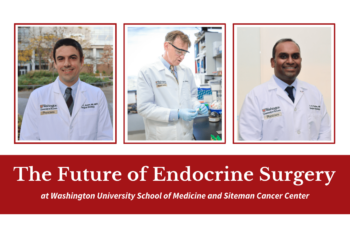
What does the legacy of excellence in endocrine surgery at Washington University School of Medicine and Siteman Cancer Center mean for patients? Our surgical oncologists have experience with a high volume of complex cases, making them experts in endocrine surgery.
Sean Glasgow, MD, explains the the U.S. Preventive Services Task Force’s new recommendations on when to get screened for colorectal cancer.
Siteman Cancer Center is the only National Cancer Institute-designated Comprehensive Cancer Center in Missouri and is ranked as one of the nation’s top cancer facilities by U.S. News & World Report.
Lung surgeon Benjamin Kozower, MD, MPH, explains new lung cancer screening guidelines from the U.S. Preventive Services Task Force.
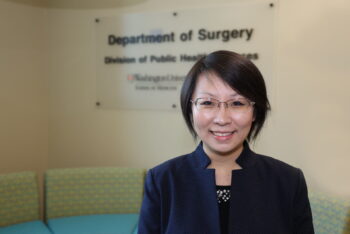
Yin Cao, ScD, MPH, is researching the troubling rise of early-onset colorectal cancer. In a series of publications, Cao’s research points to risk factors for the condition and offers some methods of prevention and improved screening.
Results of an international study including School of Medicine and Siteman Cancer Center researchers show improved outcomes for patients with advanced cases of rectal cancer.